Remarketing and ROAST

Introduction

As a digital marketer, I often get the classic “oh, so you’re to blame for those ads that follow me around the internet”. The public has been known to see remarketing as a little intrusive and presumptuous; for instance, when it ruins surprises between people with shared computers. To advertisers, however, remarketing has become the staple of retailers large and small, driving efficient ROIs and more personalised advertising experiences for customers.

We are now moving towards an online world where best-in-class advertisers are providing fully personalised and bespoke online experiences, with improved automation options, increased feed-usage and more comprehensive tracking making this possible. Personalisation is now seen as vital for driving better performance, and companies that do not use it will immediately be at a disadvantage to the competition.

In addition to creating a personalised on-site experience, advertising creative served off-site can also be tailored using feed-based remarketing.  This goes beyond traditional segmentation of demographics and placements and brings the granularity down to the individual user level.


The History of Dynamic Remarketing

Remarketing came to the Google Display Network seven years ago, in the first half of 2010. Since then, many products have been added to the offering, and more recently Facebook have begun releasing similar products:


Timeline (002)

Example & Setup

When browsing the Shrimps site, a user looks at the following pages:

Capture

Each of these page views is tracked with the product IDs linked back to each site visitor and stored within the cookie associated with them. Then, rather than a static ad creative, the user will be served an automated product ad that looks like this when browsing a different site:

Finalddd
The ads fit into the consumer journey much more neatly when products in which the user has already shown an interest are served. The above example is a simple version with no text or call to action, however Google’s Ad Gallery offers many customisation options to bring these dynamic ads in line with the look and feel of your brand. In other words, you don’t have to have a lovely pink background if your creative vision isn’t as pink-oriented as this Creative Director.

When using standard static remarketing, the level of personalisation attainable depends on the granularity of the ad group targeting. For example, we can split out remarketing lists for different areas of the site, by demographic or by placement. With this level of granularity, you can spread your impressions too thinly by ad group and end up losing the insights that larger data sets provide.

shrimps

Prices, calls to action and carousel functionality can all be programmed into the ad format, and multiple dimensions can be created simultaneously using the same design.

Shrimps ad gif
Comparing Performance

This is all very well, but “what of performance?” I hear you ask. Well, I’m glad you did, because we have run tests for a variety of ROAST’s clients to answer that very question. Where we had legacy static remarketing in place, we set up Dynamic for the client and run them alongside each other for the purposes of testing. We have compared Dynamic and Static display ads across the GDN for our clients and identified clear differences in performance:

nnnn

The findings are conclusive. ROAST’s clients are paying slightly more per click for the Dynamic remarketing clicks, but the Dynamic remarketing traffic converts at a rate that is 80% higher than the Static remarketing conversion rate. The ROAS for Dynamic is more than double that of Static and CPA is 41% lower.

Higher CTRs also imply an overall better experience for the users, interacting with products they remember from their previous browsing. Users are reminded of the products they have shown an interest in, which with our shortening attention spans, can be a great help. In fact, I often find that Dynamic remarketing ads can serve as useful to-buy lists of things I need to remember to order.

When managed correctly, with frequency capping applied, dynamic ads provide a positive experience from the user’s perspective and, as above, will out-perform Static remarketing from the advertiser’s perspective.
Other Dynamic Platforms & Future for the Capability

Dynamic remarketing is not just available in Adwords; Facebook launched Dynamic Product Ads in 2015 and have since been refining and tweaking the product to work for verticals other than retail. Like Google, they have identified travel as an opportunity they cannot afford to miss out on and in 2016 Facebook launched Dynamic Travel Ads (DTA). DTAs require complex setup and configuration but can offer advertisers more powerful remarketing options than traditional Facebook remarketing with the incorporation of individually tailored creative from feed catalogues.

Advertisers need to build remarketing into the consumer journey and tailor both the on-site and off-site messaging by making use of the technology available. Research has found that during the early phase of a consumer’s online interaction with a brand, Dynamic ads can be less effective in moving them down the conversion funnel. This effect is reversed as they move closer to the conversion point. Therefore, advertisers need to use Dynamic ads alongside more traditional segmentation to achieve high performing remarketing campaigns tailored to each user.

So, next time someone blames me for “following them around the internet”, I will explain that I’m just tailoring their online experience. I am sure they’ll understand and buy me a drink.

Holy Smokes! Google Ads’ Has New Columns

ROLL OUT ROLL OUT, Google introduces its new Setup feature within customised columns, giving new insights at the campaign and ad group level. The feature, identified by a Twitter user late last week, has been introduced across a few accounts without an announcement from Google. 

See the Tweet here.

The obvious question for this article is, why is this worth flagging? 

The new feature primarily offers a topline view of the overall health of your account, giving users the ability to identify where your account could use some attention without the need to be at the keyword or ad level.

Within Setup, there are ten new column options to choose from:

  • The number of eligible keywords
  • Details on the strength ads
  • The number of disapproved ads
  • The number of eligible Images 
  • The number of eligible Responsive Search Ads
  • The number of eligible ads
  • Eligible Sitelinks (upgraded) 
  • Eligible site links (legacy)
  • Eligible ad groups 
  • Disapproved keywords

Where we’ll focus this article is arguably the two most useful columns of Google Ads’ new feature: The number of disapproved Keywords and Ad strength details

Disapproved Keywords:

The benefit of this new column cannot be understated. The ability to view the number of disapproved keywords at the campaign level provides an immediate steer into which campaign requires more obvious attention. 

Whilst previously you were told that there were some keywords disapproved within a campaign, being given the total immediately should speed up how you prioritise your workload. In addition to this, Google provides a click-through option for the number of disapproved keywords, which will take you to the keyword level and apply the correct keyword status filter accordingly.

Do you have an example of how all this looks? 

YES, how convenient a question…

Google ads column

As we can see from the screenshot, the account has a healthy number of eligible keywords across multiple campaigns. However, we can clearly see that there is one campaign which has a huge number of keywords which have been disapproved, providing us with a clear steer on where to focus our efforts. 

Ad strength details:

This new column I would argue is by far the most useful of the platform’s latest updates. The column (shown below) identifies the number of ads which sit within each level of ad strength. Moreover, the feature allows you to drill down to the specific ads which require attention, filtering out those which are Excellent, good or average.

Ad strength

Have you identified any limitations?

Fancy that, we have an answer for this question too!

friends pivot meme

Unfortunately for us, there are still some practical limitations for the new google feature when it comes to pivoting the data. Most notably for Ad strength details. As seen below the data is pulled into one cell, and so to pull totals across the account can be very laborious for a one-off piece of analysis. 

ad strength details

We also found that it doesn’t provide insights across all campaign types just yet. When reviewing one of our app campaigns (as seen below), we found that it was unable to provide any details on the strength of the ads. 

Google columns

Okay, but can you do ANYTHING clever with the data?

In the words of Churchill the dog, Ohhhh Yes

As we see it there are two key bits of analysis you can do. The first, and most straightforward, is once your data is split out, totalling the ad strength of your campaigns. If your account has significantly more Poor rated ads, identifying and rectifying this can be a quick win for you and your client. 

Secondly, and an arguably more interesting piece of analysis, is to segment your data over time. Assuming there have been changes to your ad strength over the given date range, you’ll be able to assess and demonstrate how a positive or negative change has impacted your core metrics. 

Interested in finding out more about our ROAST PPC expertise? Contact us here.

ROAST are a 2023 Google Premier Partner

ROAST is thrilled to announce that we are a Google Premier Partner for another year running and are in our country’s top 3% of partners. Google awards Premier Partners based on the in-house experts’ performance, knowledge and certifications, so it is an outstanding achievement to be a Google Premier Partner.

What does being a Google Premier Partner mean?

A few of our favourite benefits include…

  • Product Betas: We gain access to upcoming product betas to be in the know about the latest and most exciting ways to help client growth.
  • Education: There is always room to grow and that is what makes being a Premier Partner so great, we have the ability to build our product knowledge and earn certifications. Expanding our Google Ads expertise.
  • Insights: Insights are great and ensure we can really maximise the campaigns we run so being a Google Premier Partner gives us access to global consumer insights to better inform business decisions.

Our Managing Director John Barham adds “We are very proud that for another year our Paid Media team have achieved the incredible level of Google Premier Partner. For us, it’s important to continuously learn and better serve our clients so to be recognised for this is great and shows the exceptional skills we have in our team
Interested in how ROAST can assist with your Google campaigns? Reach out to the team here.

Interested in more Google news? Read our overview of Google’s EMEA product kickoff or explore our article on Google IO 2023: Embracing the AI Revolution.

Google’s EMEA Product Kickoff: An Overview of the Key Updates

As you may or may not be aware, Google has now released their new EMEA product launches and updates for H1 this year. In this article, ROAST’s Paid Media account executives, Libby Marshall-George and Max Knight, will take you through an overview of the key updates which they believe will be most impactful for advertisers this year, including:

  • The transition to GA4 with some of the most useful updates, the new features to further privacy centric measurement, as well as effective measurement updates.
  • The evolution of Performance Max campaigns, and how these will further assist marketers control and reporting of these.
  • Modernised search campaigns to ensure a user’s visual experience of navigating the landing page is included, to provide a competitive advantage. In addition to further site performance monitoring, with the new ‘interaction to next paint’ metric.
  • App updates to allow for individualised recommendations to maximise performance; also, updated measurement features.

GA4, Privacy, and Measurement

GA4

In preparation for GA4 replacing Universal Analytics on the 1st of July 2023, Google has kicked off Q2 with some exciting new updates to the platform allowing for more in-depth reporting and customisation.

Google has recently launched Item Scoped Custom Dimensions, a feature which provides information about the products or services with which users interact in an event (e.g., the colour of the item which was sold), which will allow advertisers to capture additional information in their Ecommerce Journey. As well as this, you can now use Custom Channel Grouping to customise per business needs. These updates will allow advertisers to analyse data that is more specific to their business needs, resulting in more in-depth reporting, ultimately enabling us to make more informed decisions for testing and analyses.

Privacy Centric Measurement

With the deprecation of third-party cookies due next year, Google has announced new features which will enable further Privacy Centric Measurement for Google advertisers. Launching this month is Google’s Conversion-based Audiences with First-Party Data & Customer match. By implementing Enhanced Conversions for Web and enabling conversion-based audience lists, customer segments specific to your business will be automatically generated and updated in real-time. This will allow advertisers to create audience lists with ease and keep first-party data fresh and up-to-date. We believe that this tool will help us when looking to effortlessly drive conversions in a cookieless world, whilst not having to dedicate too much time to the tool due to its automated nature.

Advanced Measurement

Currently in Beta for Google Ads is the External Conversion Lift User Based for Video Action, which allows advertisers to measure how many conversions occurred because of users who saw the ads. When reviewing this activity, this feature will likely be very helpful when proving the incremental value of Video Action campaigns, and help us when deciding whether or not they should become a crucial part of their marketing mix.

Performance Max

Performance Max campaigns will provide more insights, allowing greater understanding on reporting and budget pacing; therefore, users can recognise, quickly improve, and in turn, optimise their campaigns. This page will be based upon the accumulation of engagement and conversions, so, insights may not be very strong for new campaigns, but should become more prominent the longer the campaign is live allowing for identification of new market opportunities.

Google will allow you to add campaign level brand exclusions across Performance Max campaigns, for both search and shopping. This means that our ads can avoid landing on specific queries or keywords that have underperformed. This should also apply to misspellings and searches in a foreign language. Ultimately, this will mean we will be able to negate branded traffic if needed, analyse what is most efficient for our campaigns to attract users with greater intent, and show greater efficiencies in our metrics, including click through and conversion rate. 

We will now be able to report on and view metrics at an asset group level. Beforehand, this was only available at campaign level, making it difficult to separate performance data between different asset groups. This should help marketers create more efficient asset set ups and clearer analysis that can be more individualised for optimization decisions from the individualised data that asset groups will now include.

Search

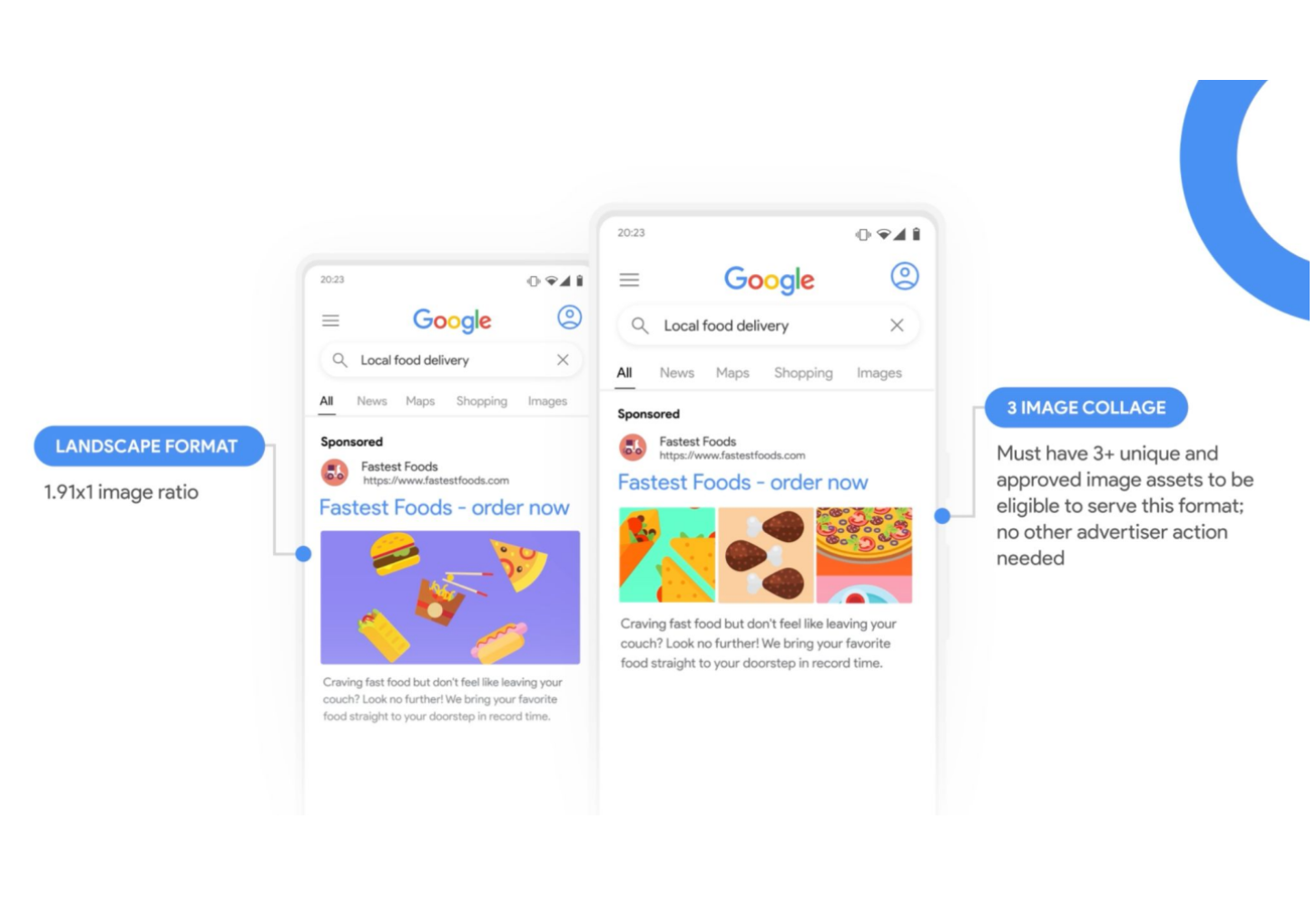
Google has highlighted image extensions as a feature that should be included across all campaigns. Consumers are now more than ever looking for visual experiences, and are thus, more likely to connect with a brand with which they can visually identify. The two new formats include collage and landscape image assets. Amongst many benefits, applying image extensions allows our campaigns to take up more space across the SERP, expanding your ads coverage across the results page, pushing competitors out of view, and giving the consumer an insight of the offering, something which is especially beneficial to B2C advertising. Untitled design (8).pngWe have seen image extensions becoming increasingly popular from Q1 in 2022 to 2023. Total percentage of clicks from image extensions has grown 140% this year, as click through rate has seen a rise of 94%. This suggests the growth in clicks are coming away from standard headlines clicks, plausibly due to users’ familiarity with image extensions. Similarly, growth from sitelinks has risen 25% within the last year in our accounts as more SERP real estate is taken up.

Text assets have also been updated, Google’s AI will use this to create automated ads, which will be optimised to fit the context of each by altering their headlines and descriptions. Currently, these will only be available in English, but we are hopeful that we will see the ability to provide this across different languages in the future. This update will be beneficial in filling out the maximum number of headlines and descriptions, improving the variety of contact, and contributing to an improved optimization score. However, brand guidelines and specific information need to be taken into account due to AI not recognising these issues. 

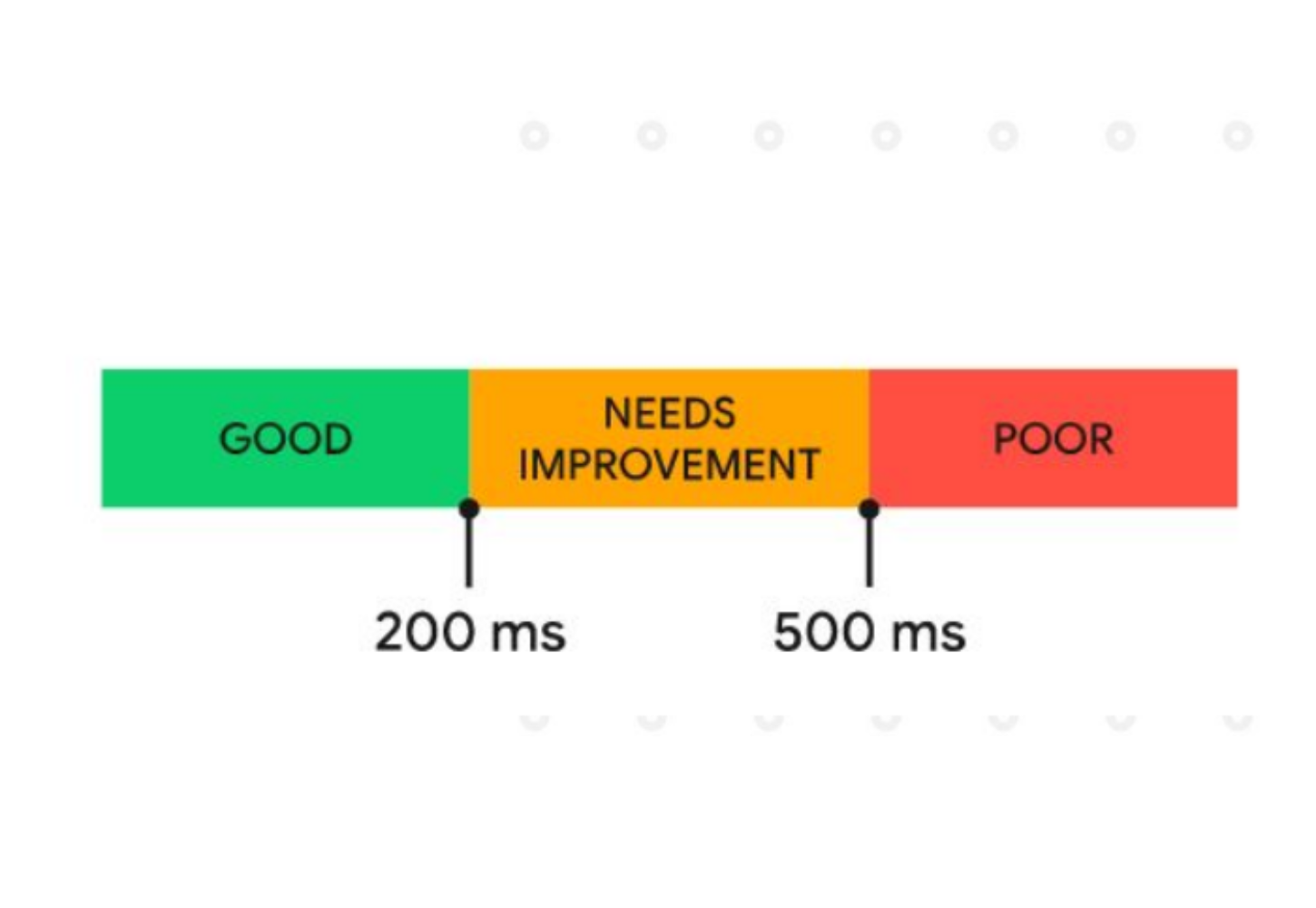
Google’s new metric, Interaction to next paint, will measure the responsiveness of your site in respect to user input, which will allow you to continuously monitor your site performance using analytics. This scale is in terms of time, for example, a speed below 200 milliseconds means that your page has a good responsiveness. This will allow for greater insights on what interactions users are more inclined to focus on and analyse whether the efficiency of your page will generate greater performance. Google suggests that with every second delay in page load, conversions will fall by 20%, therefore, this metric will be vital to monitor.3.png

App

Google App Campaigns for Engagement (ACe) are now available globally, offering fully AI-powered campaigns that will serve across multiple Google properties, targeting users who have downloaded your app and encouraging them to take a specific in-app action. This will allow advertisers to reach, engage, and convert these more valuable customers. 

Another recently launched tool is Google’s Optiscore for Apps, which uses automation to give you personalised, real-time account recommendations. Optiscore for Apps will aid advertisers in prioritising actions that will have the most impact on their business and support the execution of these through scaled automation processes. Despite this, the actions usually come at a greater cost for businesses, to unlock more volume, therefore, are not applicable to campaigns that have a fixed budget. On top of this, the recommendations do not assure a more efficient campaign, and so, it is important to review these before applying. 

Lastly, also newly launched is Google’s On Device Conversion Measurement, a privacy-centric solution relying on the on-device matching of your first-party data. This will enable more accurate conversion measurement by increasing deterministic data for advertisers across Google-owned and Google-operated apps for iOS. This means that no identifiable data is sent off the user’s device and allows advertisers to track and measure the effectiveness of their ads when driving conversions on apps without relying on third party cookies. This means that conversion data is processed and stored directly on the user’s device, ensuring their privacy and security. This is only available via Google Analytics for Firebase and requires your GA4 account to be linked to Google Ads as well.In summary, Google has launched lots of new features and products to best prepare advertisers for a cookieless world, with a key focus on first-party data measurement and reporting enabling tools. With Google’s updated features for Performance Max campaigns, advertisers have more power, freedom, and knowledge at their disposal. As well as more automated suggestions in search, Google is trying to improve the ease of campaign optimization with bidding and keyword suggestions, it will be interesting to find out what tailored recommendations are, and if we see an incremental uplift in performance when these recommendations are implemented.
If you would like to find out more from our Paid Media team, please reach out to them here. You can also sign up for our newsletter here and follow us on LinkedIn and Twitter.

Read more news from ROAST!

ROAST’s Patrick Kearney takes BrightonSEO

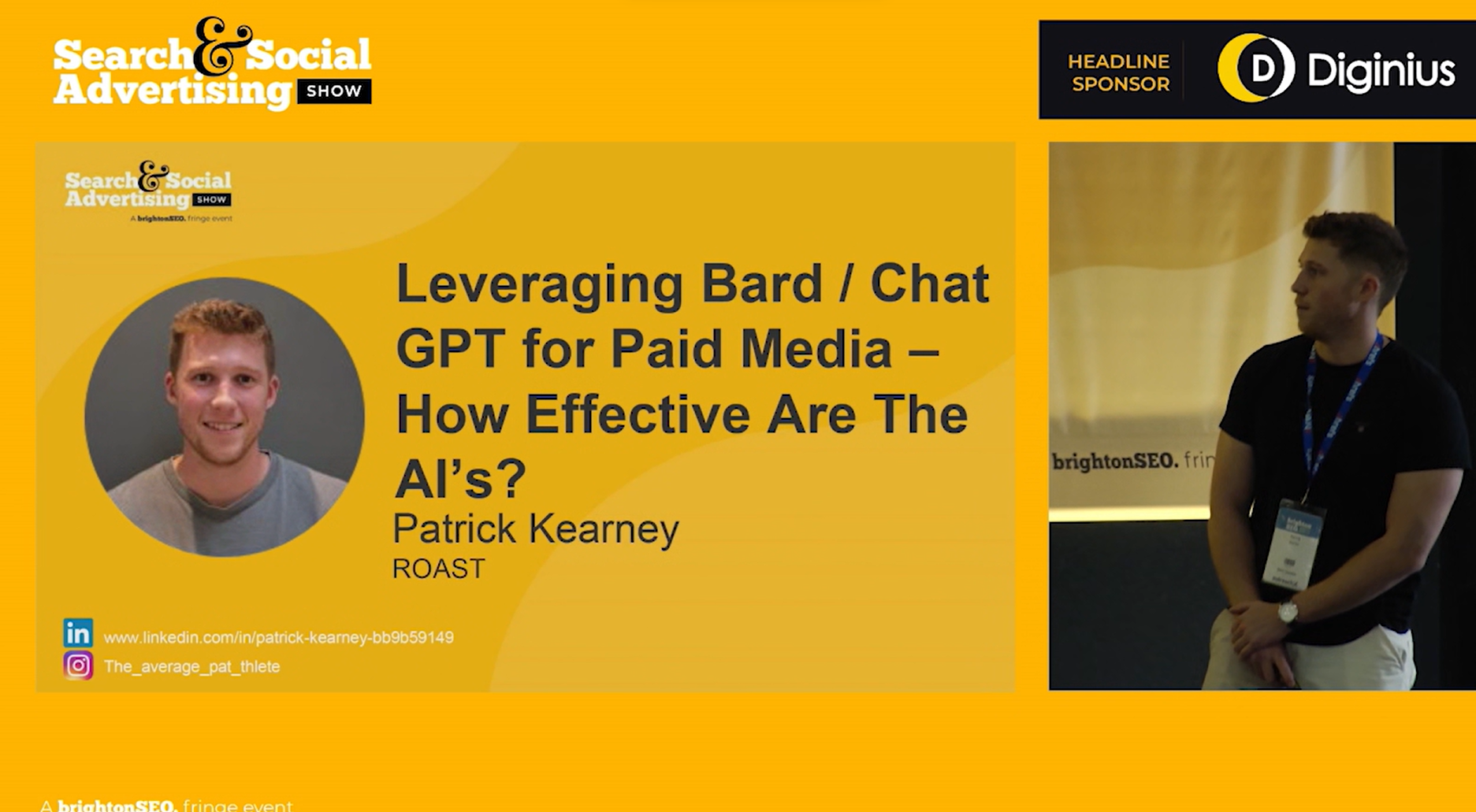
A few weeks ago, ROAST’s Patrick Kearney took to the stage at Brighton SEO to present on how Paid Media can leverage AI.Screenshot 2023-10-10 103111.pngTo watch a recording of Patrick’s talk at BrightonSEO, you can watch it here.If you would like to hear more from our Paid Media team – please get in contact here.