What’s the latest with TikTok controversies?

TikTok has been in the news again in March as discourse around privacy and data collection on the app continue to ramp up.

In case you missed it…

TikTok is owned by Chinese company Bytedance, of which the Chinese Government has a 1% stake in. Combined with a staggering amount of user data tracked in the app, this has caused concerns globally around how safe it is to have the app on mobiles, especially those in Government positions in other countries.

While many other tech companies such as Meta will often track similar amounts of data, largely to power their advertising business with 3rd party cookies, or track keystrokes to allow for troubleshooting of errors, the concern for many is the potential access of this data by a foreign government.

Theoretically, data may be passed on if requested as per China’s National Intelligence Law, and has been the spark of discussions around the usage of the app on government workers phones and is the core reason TikTok has been in the news so much. Their counter claim is that they do not request data located in other countries.

The UK Parliament already deleted and wiped the official account in August 2022 due to these concerns, and more recently London City Hall staff are no longer allowed to have the app on work phones as of March 2023. The Scottish and Welsh government are soon to follow suite, while France, Norway and the Netherlands are already there.

More recent headlines have come from TikTok CEO Shou Zi Chew appearing before congress this week to face a day of harsh questioning. In general, TikTok are keen to work with worldwide governments, notably the USA, to adjust processes and ensure data is not at risk – one method in progress is storing this data in the USA so it is not accessed by Chinese Engineers, but this isn’t yet set up.

What does it mean for advertisers?

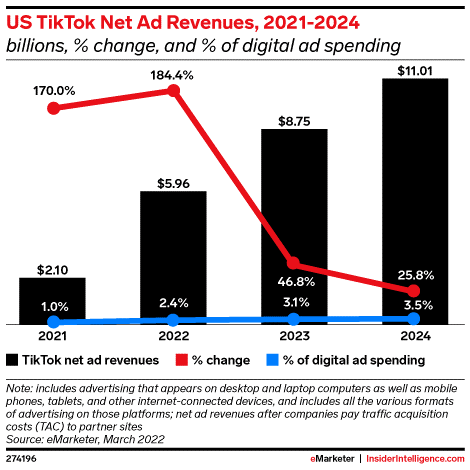
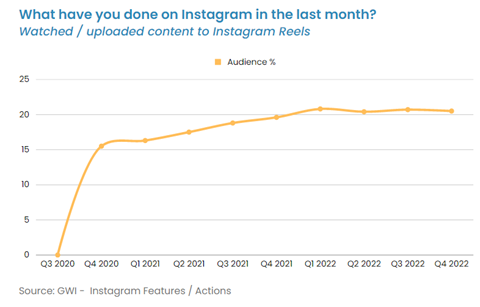
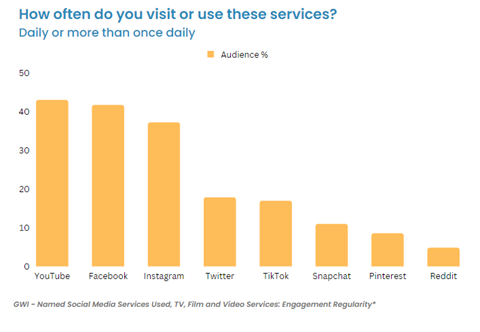
While the concerns are largely focused on government officials at this point in time, there are still wider conversations about the use of the app for children, with a different set of safety concerns here. The app is addictive by nature, and in the last month TikTok announced a time limit of 60 minutes/day for users under 18 years old – however, this can be bypassed by entering a password to use the app further (and is therefore likely easy to circumvent). This leads into the second area of controversy about the impact on teenagers’ mental health – they are spending, on average, over 100 minutes a day on the app.GS-Image-1.pngIf these conversations continue without Bytedance providing sufficient and compelling evidence that there is no issue, this would massively shake up advertising on social media. TikTok is a full funnel marketing platform and media investment has continued to grow following product releases, improved algorithm sophistication and continual updates to creatives and audience opportunities -providing an option for everyone to advertise on the app. While their growth has absolutely overtaken their original competitor Snapchat, the removal of the app would leave a large hole in a lot of media plans.GS-Image-2.pngSource: https://www.insiderintelligence.com/content/us-tiktok-advertising-2022Even in that unlikely scenario, shortform content won’t be going away. Meta and more specifically Instagram would likely come out as the winners, considering Reels are the next closest thing and have also seen growth since they launched in late 2020, through audience usage appears to be more stagnant as we’ve come into 2023. Another alternative is YouTube Shorts, later to the party this launched globally in July 2021 and has had good growth, crossing 50 billion daily views as of Q1 2023, this still lags behind Reels at 140 billion daily views.GS-Image-3.pngHowever, it isn’t completely farfetched considering the entire app is already banned in India since 2020 and that President Trump already tried to ban it in the USA at the same time, though it is likely more realistic that concessions would be made by Bytedance before this happened.
This remains a hot topic and an everchanging landscape for all social media companies, evidenced by the state of Utah recently signing a bill requiring parent permission for anyone under 18 to use social media (although not coming into force until 2024). At the same time, they are able to curfew usage and have access to their children’s posts.

This is all in an attempt to hold social media companies more accountable for the type of content users see and again is driven by the perception of declining mental health as a result of the apps. It will be well worth keeping an eye on the news as these situations develop and considering media plans accordingly, as well as looking at any new disrupters to the scene.

Additional sources:

https://www.bbc.co.uk/news/uk-england-london-65068651 

https://www.bbc.co.uk/news/uk-politics-62410234 

https://news.sky.com/story/utah-is-first-us-state-to-require-parental-consent-for-under-18s-using-social-media-12841539 

https://techcrunch.com/2023/02/03/google-says-youtube-shorts-has-crossed-50-billion-daily-views/ 

https://techcrunch.com/2023/02/07/tiktok-is-crushing-youtube-in-annual-study-of-kids-and-teens-app-usage/ If you would like to learn more about how the most popular social platforms of the moment are setting the tone for the future of social media, please read here.

The future of social media is educational and eco-conscious

How are the most popular social platforms of the moment setting the tone for the future of social?

Younger generations are feeling the pressure of social media far more than those at the other end of the spectrum, with 45% of gen Z saying that they feel there’s too much pressure to be perfect on social media (versus 23% of gen X and 16% of boomers). The same findings from Global Web Index (GWI) show that 36% of gen Z worry they spend too much time on social media (versus 28% of millennials); 24% say they are using social media less than they used to (matching millennials).

However, it’s not all bad news. Time spent on social media can be beneficial when used in the right way, for instance as an educational tool, or for staying informed about world news and issues. Most likely to agree with this statement are millennials, with 42% believing that social media is good for society.

How are social platforms being used right now?

GWI data tells us that Facebook and Instagram still dominate in terms of reach. In the UK, 34% and 29% of people use Facebook and Instagram, respectively, for entertaining content; 29% (Facebook) and 28% (Instagram) use them to keep up to date with world news.

TikTok usage, unsurprisingly, has increased for entertainment. Perhaps more interestingly, users are also using the platform to explore world news and trends. In Q4 2020 only 5% of users used the platform for world news, whereas this increased to 15% in Q3 2022.

Recent ad campaigns such as ‘BookTok’ are an example of TikTok’s attempt to shift away from the perception that it is just an entertainment platform.

We Are 8

We Are 8 is making waves with its mission to be a hate-free social media platform, by moderating posts and curating positive and engaging content. Users gain shares of We Are 8 revenue for any advertising they choose to watch on the app, currently from brands like Nike and Virgin. The user can either keep the revenue or donate it to a charity.

We Are 8 offers enticing incentives, claiming 100% view-through rate and viewability; 10% click-through rate; automatic charity donations; and reduced digital carbon footprints (in partnership with climate action platform Ecologi). 50% of total spend is redistributed to 8Citizens, and 5% of all spend is automatically donated to charity.

BeReal

Data analysis shows that with a staggering 7.67 million BeReal users, the app’s usage has increased by over 315% since the start of 2022. As a platform with no current advertising, it appears that audiences want increasingly authentic content, moving away from algorithm-heavy platforms. However,  it is expected that there will be advertising space on the app in the future.

Disrupting the space

New social media apps coming onto the market are looking to take the best bits from these existing products, while also going back to basics. They don’t have advertising baked in just yet, but as they continue to grow, it’s almost guaranteed to be on the roadmap. The question is: how long will it take to get there, and when it does, will these challengers maintain their standards and beliefs?

Deloitte tells us that 80% of millennials only want to buy from brands that put others’ interests above their own. Platforms like Supernova have taken note of this statistic by donating 60% of advertising revenue to charities (selected according to members’ preferences).

There’s an expectation that when ads eventually are implemented onto these platforms, it will not be as sophisticated as on incumbents, with their sophisticated bidding algorithms and optimizing conversations.If you would like to learn about the latest TikTok controversies and what these changes mean for advertisers, please read here.

Threads, the next big thing?

With the launch of the latest social platform Threads, we eagerly await the user reaction. Will it take Twitter by storm? When will advertising opportunities come into play?

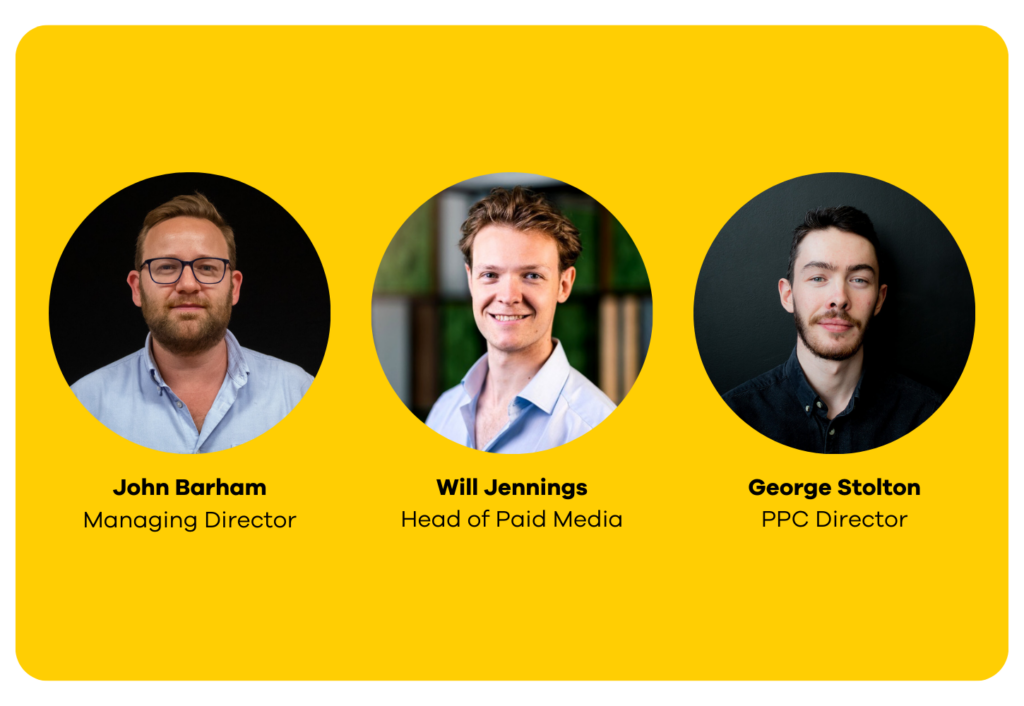
Our Managing Director, Head of Paid Media and PPC Director give their thoughts and expectations on the new platform.

John, Will, GeorgeThe opportunity for Meta to hoover up lapsed and disenfranchised Twitter users is obvious and clear. It makes sense at every level as something to aggressively target. However, the success of Threads may well come down to a few nuanced factors. Firstly, who is Threads actually being created for? Let’s be honest, it’s for advertisers who want access to the Twitter audience but don’t want to have to deal with the continued disruption and brand safety concerns driven by the new ownership. To do this, Meta needs the audience – you, me, media consumers – to get on board with their new platform. Many users however project different personalities and behaviours on different social platforms: stronger opinions and sharper engagement have been the foundation of Twitter’s past growth. The keystone to success for Threads is simple. Will consumers be willing to dial down their ‘Twitter’ behaviour now that it is associated with their Meta profile for all to see? Time will tell.

John Barham, Managing Director

The decision to muscle in on Twitter’s territory is a timely one by Meta. Given the recent turmoil on the platform and following uncertainty from advertisers, seizing the opportunity to gain valuable market share is a potentially revolutionary move. They’ve received upwards of 30 million on their first day of operation according Zuckerberg himself.

While Threads is not alone in the market with smaller competitors such as Bluesky and Mastodon, the ability to keep your Instagram handle and followers is an obvious draw for people looking to mirror their digital following cross platform. The app is clearly aligned with Instagram rather than Facebook in the parent company’s portfolio, presumably to benefit from Instagram’s younger and faster tech adopting audience. This will likely keep it more attractive to potential future advertisers, as and when Meta decide to launch their ad offering on the platform.

What impact will this have on advertising in general? This is very early days, but if it becomes a true competitor to Twitters huge corpus of human conversation then it will naturally have a place on media plans. I’m in no doubt that Meta will market this to advertisers as a further benefit to utilising their full ad suite, with the ability to track a user across their increasing platform count, helping to close the loop of lost attribution between walled gardens. It’s also likely to appear a far safer bet considering it will benefit from all the targeting and brand protection levers available on Facebook and Instagram. One thing is for sure, Elon Musk won’t cave to the competition easily, so expect some more waves to be made before full-service resumes and a winner emerges.

Will Jennings, Head of Paid Media

The Twitters Ads platform tends to not be as sophisticated or easy to use when compared to Meta, so if there is an option for advertisers to eventually target Threads in the existing Meta Ads Manager ecosystem it will be a lot more attractive. This is especially true when it comes to automation and machine learning, providing more ad placements to run alongside Instagram and Facebook. This will provide more data and an opportunity for machine learning to optimise campaigns by reaching users on the best platform at the best time.

George Stolton, PPC Director
With these thoughts in mind, it will be exciting to see what happens with Threads…

What will it take for Threads to thrive?

Instagram Threads has been active for just about three weeks now, after making a big splash when it launched on 6 July, hoping to be the next destination for users losing interest in Twitter.

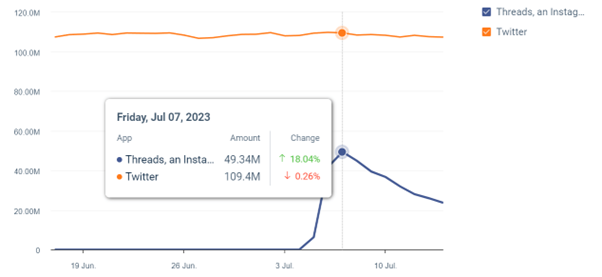
It really did make an initial impact, growing to over 100 million users within the first week. This may not be surprising when you consider that Instagram has around 1.6 billion users and they’ve purposely made the product integration, from Instagram to Threads, easily accessible.

Combined with declines in ad revenue on Twitter, caused by advertisers leaving the platform, the natural step for Threads will be to monetise and capitalise on this. To do that effectively, they need a consistent and growing user base to keep the platform attractive to advertisers. With Twitter looking to rebrand to just ‘X’, they may be looking for a fresh start.

This is where the problem lies, as there has been a significant drop in users engaging with the platform since this launch period.

Threads user decline graph

Source: Similarweb, Insights, Social Media News, Threads Week 

So, what has caused this decline? The biggest gripe is based around users being unable to view the content they expect from those they follow, with the feed algorithm showing posts from accounts they do not follow as well as a lack of any chronological filtering. Reports of spam replies within the comments also don’t help gain user trust in the platform, although Twitter has a fair amount of this too.

The key factor of an ad on a social platform is that it needs to be ‘thumb-stopping’ – no one on Instagram, Twitter or any other social platform is actively looking for your brand, so you need to give them a reason to stop and pay attention. That presents two issues in the case of Threads if it gets monetised in its current state:

  • If the content isn’t personalised and therefore engaging to them, users will stop scrolling. That means less time spent on the app and less likely for your ads to show. TikTok is the reigning champion of getting users to spend time in-app, clocking in at an average of 55 minutes, per day.

Twitter is still higher than Instagram in this metric too, at 34 minutes vs 30 minutes. Threads therefore will have some significant work to do in terms of getting users to stay on the platform.*

  • Twitter has had controversy in the past around the content ads have appeared next to, causing enough negative PR that many advertisers withdrew from the ad platform even before Elon Musk took it over. Threads has the potential to face a similar issue for advertisers, though launching in July allows time for Meta to iron out the kinks before the holiday period, which would be more attractive to potential advertisers.

We can still expect user numbers of Threads to grow however, it still hasn’t launched in Europe yet due to regulatory concerns and how the app will use personal data. We’d also expect to see updates roll out to address some of these initial issues, so it is far too early to write Threads off.
Sources:

*Orbelo: https://www.oberlo.com/statistics/average-time-spent-on-social-media

X leans on Google to sell their ad inventory programmatically

There’s big news coming out of Elon Musk’s largest acquisition as X have turned to sell their ad inventory programmatically for the first time. Earlier this year, X recently introduced ad inventory outside of their standard home feed, with advertisers able to appear in comment sections under popular posts within the search results and on the account pages of highly followed accounts. However, advertisers will be restricted to X’s home feed because this additional inventory will not be available to advertisers to buy programmatically. Regardless, this is a significant change for the walled gardens with X losing substantial advertising control over their platform for solely monetary purposes.At current, only allowing advertisers across X’s home feed is the safest bet because it has the most integrations with third-party brand safety providers, which is a present necessity given X’s content must now adhere to Google’s publisher standards with selling their inventory programmatically. These brand safety partners are crucial inclusions in campaign setup, with brand safety becoming a progressively larger issue across the platform, advertisers can opt out of targeting X if they desire.Now, why are X doing this? As alluded to earlier, X are desperately trying to recoup lost revenue ever since Musk took over. Insider Intelligence slashed its forecast for X’s 2023 ad revenue to $2.98 billion, which is down 37% on the projection made in October for the same period, prior to this programmatic news surfacing. This is based on the company continuing to struggle to get to grips with issues ranging from content moderation to tech glitches, alongside a heavy number of redundancies that mean advertisers are left guessing why their rep isn’t responding to their emails.Allowing your inventory to be bought programmatically across the open marketplace, in theory, should open the floodgates for advertiser revenue to pour in due to its cost-efficient and unparalleled reach. Initially, there is no doubt this will happen and will temporarily balance their books, however, if Elon wants this to be a long-term solution, he is setting himself up for failure without the backing of a strong programmatic and sales team in place. Musk’s revolutionary business model of sacking everyone may just come back to bite him.Could this all be an elaborate and orchestrated plan by Musk that snowballs a shift toward more walled gardens conforming to the idea of programmatic buying? Regardless, it’ll be interesting to see how this unfolds and how X adapts to the everchanging advancements of programmatic buying.If you would like to discuss this further, please get in touch with us here.

Stay up to date with the ROAST newsletter or follow us on socials below:

TikTok for SEO Success: Finding an SEO strategy that works for you

Our Senior Organic Performance Manager, Aimee Metcalf, spoke on the recent Go! Network webinar on ‘Social as an Engine – Finding a Strategy that Works for You’, watch the full video here.

Below is a breakdown of her thoughts on this subject.

Table of contents

  • What exactly is TikTok SEO?
  • Why do we need to care about TikTok SEO?
  • Is TikTok threatening Google’s dominance for search?
  • How TikTok SEO is different from traditional SEO.
  • Step 1 | How to optimise for TikTok’s “For You” Page. 
  • Step 2 | Understanding TikTok Ranking Factors. 
  • How to incorporate TikTok in your Google Search strategy.
  • How can we optimise TikTok videos for Google Search?
  • How do we measure TikTok success on Google Search?
  • Key Takeaways. 

What exactly is TikTok SEO?

TikTok SEO is the practice of optimising your video content for TikTok’s search engine, specifically for TikTok’s “For You Page” and search results pages. Just as we would traditionally use keywords and analytics to optimise website content for higher search engine rankings, we can now use specific tactics (exact tactics explored later in this piece) to help TikTok videos show up in more search results, this includes appearing in results both on the TikTok platform as well as Google search.

Why we need to care about TikTok SEO 

TikTok is no longer a platform just for short-form entertainment but should now also be considered a search engine, particularly among the Gen Z audience (those born from 1997 to 2011). We know that Gen Z are increasingly engaging in TikTok, for example:

Among Gen Z outside China and India, use of  TikTok has grown by 43% since Q4 2020

GWI Gen Z Webinar | February 2024

Instagram is Gen Z’s favourite platform, but they believe TikTok has the biggest cultural influence

GWI Gen Z Webinar | February 2024

But how exactly are Gen Z engaging in TikTok? Gen Z are increasingly using TikTok as their preferred social engine,  with TikTok overtaking Google as the most popular search engine among Gen Z according to Adobe 2024 report

Adobe Jan 2024 Survey also found that nearly 1 in 10 Gen Zs are more likely to rely on TikTok as a search engine than Google. TikTok: The New GoogleThe same Adobe Jan 2024 Survey also found that Over 2 in 5 Americans now use TikTok as a search engine. With the above insights in mind, brands can no longer ignore the power of TikTok for search,  particularly for those targeting younger generations like Gen Z, or brands who have an American target audience.

Is TikTok threatening Google’s dominance for search?  

Core Google services, including search and maps, are being heavily impacted by a growing preference for TikTok and multi-format content like video as the first stop on Gen Z’s’ path to discovery. 

Google’s senior vice president Prabhakar Raghavan, in a discussion on the evolution of search, even noted users are now turning to apps like Instagram and TikTok instead of Google for discovery purposes. Users are increasingly moving away from typing in keywords into Google search but rather looking to discover content in new, more immersive ways. 

“In our studies, something like almost 40% of young people, when they’re looking for a place for lunch, they don’t go to Google Maps or Search,” he continued. “They go to TikTok or Instagram.” 

Prabhakar Raghavan, Google’s senior vice president

User’s are researching queries they would traditionally search for on Google but staying on the TikTok app much longer than they would on Google due to the entertainment factor and tailored algorithm.. Highlighting the opportunity for brands to fit seamlessly into the videos their target audience are already engaging with, through platforms like TikTok.

TikTok SEO is different from traditional SEO

SEO strategies for Google and TikTok share some similarities but also have notable differences. Both emphasise the importance of creating informative and helpful content tailored to the target audience’s search intent. Yet, there is one significant difference between traditional SEO and TikTok SEO: previous brand success and brand authority do not heavily influence TikTok rankings unlike Google, where brand authority plays a significant role. 

  • TikTok = visual

TikTok SEO involves optimising video content, while traditional SEO involves optimising text-based content. 

  • TikTok = hashtags

On TikTok, using popular and relevant hashtags are a great way to help users find and discover new content, more so than optimising for relevant keywords like traditional SEO.

  • TikTok = engagement

On TikTok, success is often measured by the level of engagement a video receives, such as the number of likes, comments, and shares while traditional SEO is predominantly focused on rankings. 

  • TikTok = non-authoritative

For Google search, sites that want to rank top of page 1 need to earn this by showing Google that the site is an authority on the topic.  However, TikTok does not factor authority measures (like follower & like count) into its SEO ranking algorithm. Step 1 | How to optimise for TikTok’s “For You” Page? 

Like traditional website SEO, identifying new TikTok video opportunities starts with thorough keyword research. Tools which can be used here include:

  • TikTok’s predictive search feature
  • TikTok’s keyword insights tool
  • TikTok’s creative insights centre – this is not only useful for keyword research but also favourable for identifying popular hashtags, songs, creators and videos most popular at a given time
  • Traditional SEO keyword research tools like Keyword Planner & Ahrefs
  • NEW! AnswerThePublic have recently released a TikTok search feature 

Step 2 | Understanding TikTok Ranking Factors 

  • Engagement

User interactions include the videos liked, videos hidden, videos added to favourites, and videos watched all the way to the end. TikTok stores all of this data and uses it to determine which videos to surface to the user. 

  • Video Information 

All information contained in a video can affect its ranking on TikTok – including hashtags, keywords, sound effects, and music. TikTok looks for videos that contain relevant keywords in their titles and descriptions, as well as videos that cover trending topics.

  • Relevancy 

Using popular sounds, filters, and ideas can help TikTok videos gain a spot on the “For You Page” faster. TikTok highlights to creators what’s trending in order to boost the chances of gaining a video on the “For You Page”. It’s Important to bear in mind that TikTok videos can stay relevant for a long period of time and even rank for years, so it’s worth creating a TikTok strategy which includes producing trending content alongside a strong catalogue of evergreen content.

  • Thumbnails 

Thumbnail optimisation on TikTok is vital – a compelling thumbnail increases CTR. Additionally, creating a visually engaging thumbnail which includes relevant text overlaying the thumbnail image is key.

  • Audience 

User interactions like comments and likes are confirmed contributing factors for having a TikTok video land on the “For You Page”. 

Although not a direct ranking factor, brands should consider collaborating with other TikToker’s or TikTok influencers within their TikTok SEO strategy. Collaborating is a great way to build more visibility by getting discovered on another part of the TikTok platform (the “Following” page).

How do we measure TikTok SEO success?

KPI 1  | TikTok search bar → to determine keyword ranking

KPI 2 | Viewers tab → analysing the audience insights to ensure the right target users are being reached 

KPI 3 | Performance tabhere you’ll find user interaction data, including metrics such as new followers, average watch time, likes, shares, and retention rate

How to incorporate TikTok in your Google Search strategy

Google also indexes TikTok videos on the main SERP highlighting that brands incorporating TikTok into their wider search strategy has value not only for TikTok platform-specific searches but also Google searches. 

Speculations as to why Google is increasingly surfacing TikTok content on Google search rather than increasing the amount of YouTube content being shown includes: 

  1. Google over the last few years has increasingly favoured site’s which incorporate short form, bite-size video content due to video content being a great way for sites to build on E.E.A.T signals and helpful content signals. Initially, the May 2022 core Google algorithm update increased the visibility and importance of site’s having video content and more recently through the April 2024 core Google algorithm update where helpful content is now built into Google’s ranking algorithm.
  2. With SGE rolling out in the US and soon to be rolled out in the UK,  we know there has been a clear emphasis placed on user-generated content by Google. Google has put increasing value on surfacing user-generated platforms like TikTok, Reddit and LinkedIn, with rankings of these platforms having more than doubled towards the end of 2023 in the US.
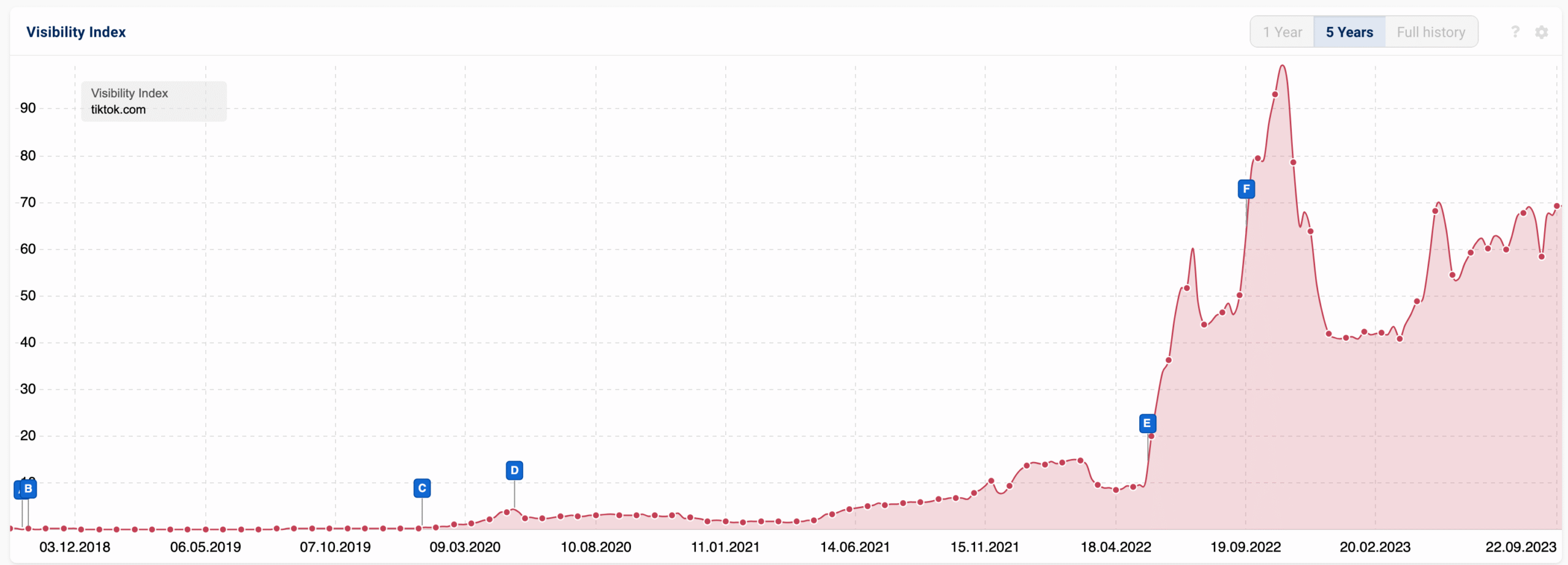
TikTok’s visibility on Google US SERP according to Sistrix dataTikTok’s visibility on Google US SERP according to Sistrix data. Source Here Ultimately, the introduction of TikTok in Google SERPs is likely to be Google’s way of avoiding the potential loss of market share but also adhering to Google’s ranking algorithm. Ranking short-form videos like those on TikTok, aligns to Google favouring sites which produce helpful content (E.E.A.T) created for users rather than search engines. 

How can we optimise TikTok videos for Google Search?

Step 1 | Analysis of the Google SERP to identify the categories where TikTok/ short-form video content is favoured 

Step 2 | Highlight if the suggested TikTok video content is a page embed opportunity or just a TikTok platform opportunity 

How do we measure TikTok success on Google Search?

KPI 1 | Traffic driven to the TikTok profile and website pages where TikTok videos are embedded into the page copy

KPI 2 |  Keyword rankings for the target pages with TikTok videos embedded 

Key Takeaways 

No matter a brand’s industry, TikTok is all about creating high-quality content that’s relevant and helpful for the user. Undoubtedly, TikTok is already playing a major role in search and shows no signs of slowing down. It is therefore increasingly important for brands, particularly those with a Gen Z target audience or those looking to capture their target audience at the discovery phase of their purchasing journey, that TikTok SEO is incorporated into a brand’s overall search strategy – otherwise, your competition most likely will. To find out more on how ROAST can support with your organic strategy, or more specifically during the discovery stage through platforms like TikTok, get in touch here.
As time ticks on TikTok, what impact might a ban have on marketers?

The Rise of TikTok:

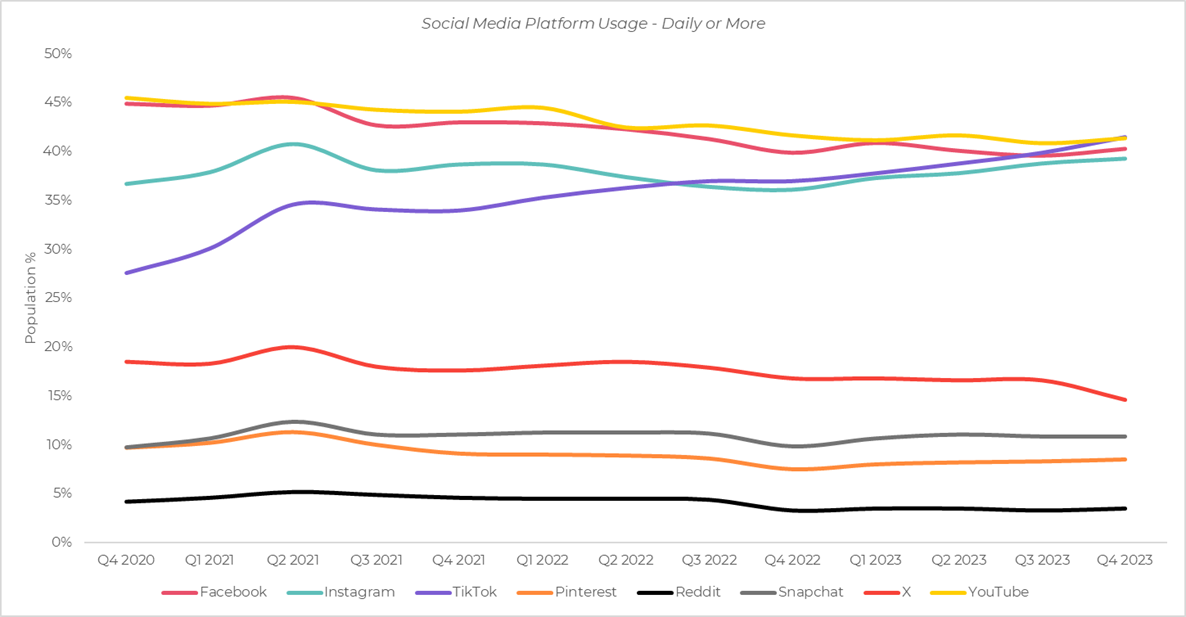
TikTok first in launched in 2017 but usage accelerated in the COVID pandemic – in Q1 of 2020 alone, the app had 315 million downloads, which is the best quarter ever experienced by an app (JWI). There are now approximately 1.12 billion TikTok users who use the platform daily or more, worldwide (GWI Core).Social Media Platform Usage

Source: GWI Core, Worldwide, Waves: Q4 2020 – Q4 2023, Social Media Usage: Daily or More

TikTok has become a regular feature on media plans, especially for brands looking to target younger demographics. Amongst the leading social media platforms, TikTok’s ad revenue has overtaken X (formerly Twitter) and Snapchat and is expected to reach $13.79 billion per year by 2026 (Statista).

As TikTok has expanded its user-base, concerns about data security have also grown and the USA is looking to ban usage of the platform. Calls to ban the platform have come from both sides of the political spectrum with lawmakers fearing that the Chinese government is receiving data on the 170 million US users of the platform from the platform’s Hong Kong-based owner ByteDance. Legislation banning the app has been signed by President Joe Biden (BBC).

The ban of TikTok would send shockwaves through the media landscape, but proactive action from brands can help minimise potential losses. An effective understanding of your audience’s media and social media behaviours can not just help the effective re-distribution of budget, but marketers can also have faith that their channel selection can still maintain impact.

Awareness & Support of the Ban:

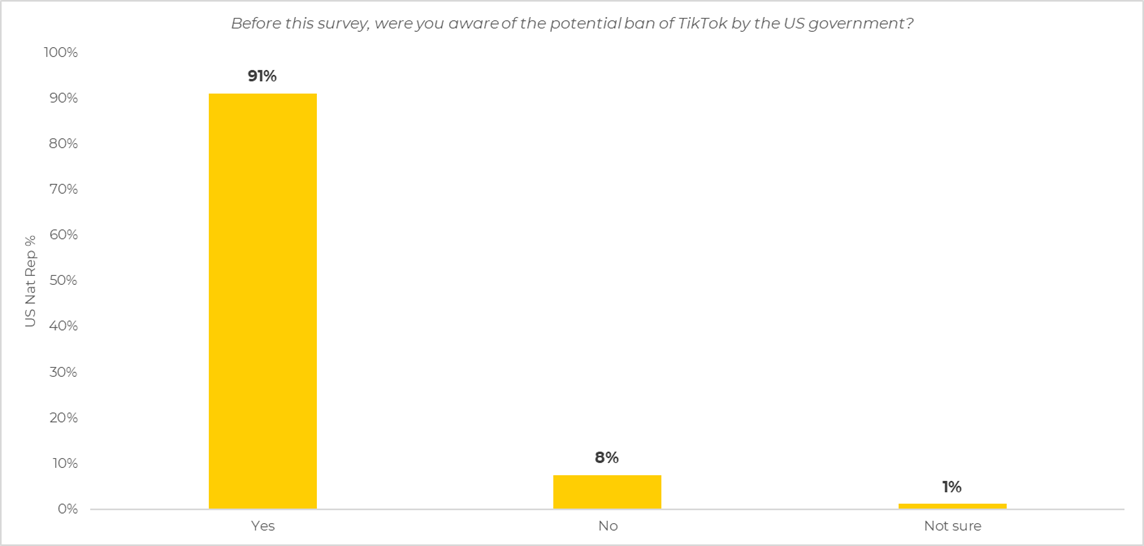
In the US, awareness of plans to ban TikTok is high, with 91% aware of the potential ban.TikTok Ban

Source: GWI April 2024 Zeitgeist: TikTok Ban, USA, Awareness of TikTok Ban, Number of Responses: 2,075

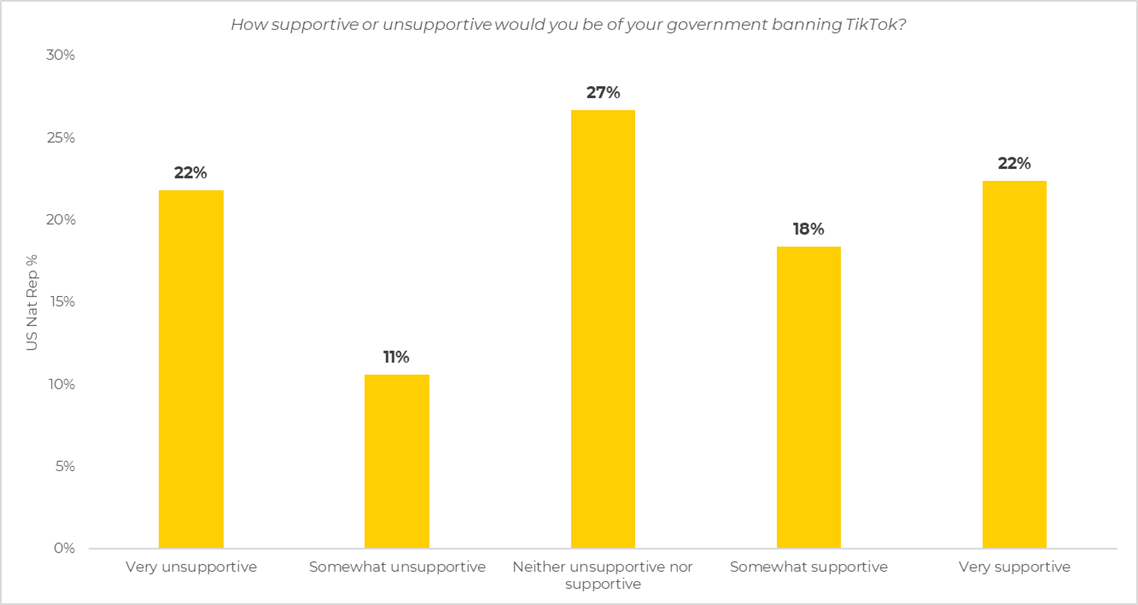
When it comes to whether US consumers think the ban is a positive or negative move, attitudes are varied. Just over a quarter (25%) feel apathetic to the prospective ban while 22% are very unsupportive and very supportive.TikTok Ban

Source: GWI April 2024 Zeitgeist: TikTok Ban, USA, Support of TikTok Ban, Number of Responses: 2,075

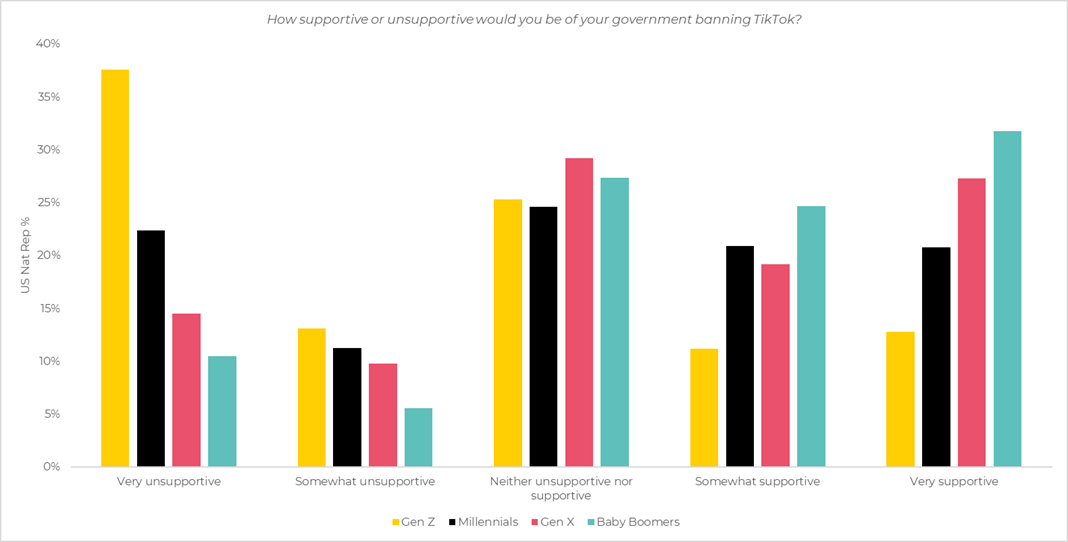
TikTok Ban

Source: GWI April 2024 Zeitgeist: TikTok Ban, USA, Support of TikTok Ban, Number of Responses: 2,075, Split by Demographic

Unsurprisingly, over a third (38%) of Gen Z are ‘very unsupportive’ of a US ban but what is a surprise here is the % of Gen Z who are neither unsupportive nor supportive (25%). Is this because they have no say on the issue? Or is this because Gen Z can get their favourite elements of TikTok on other social platforms?

Alternative Platform Usage:

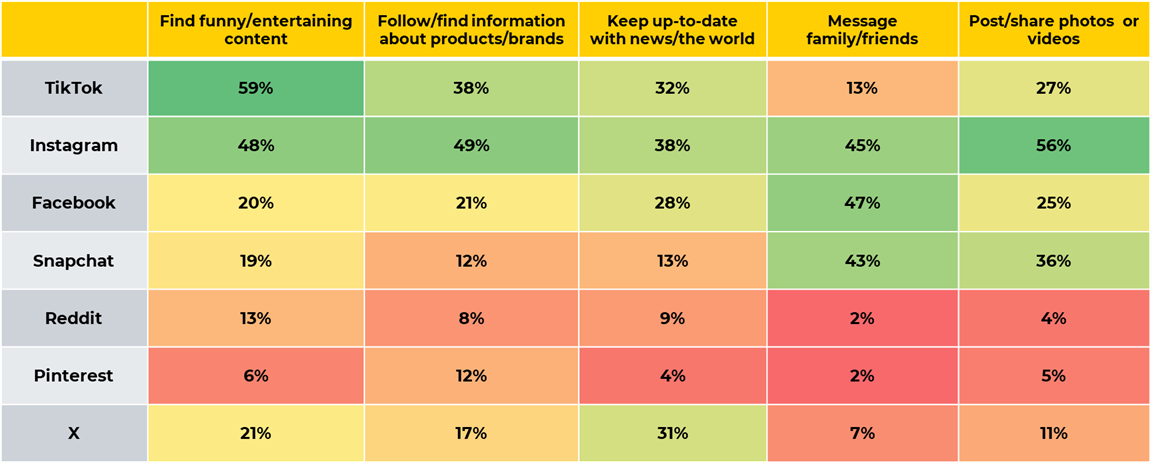
Which platforms do you use for the following?

Alternative Platform Usage

Source: GWI Core, Waves: Q1 – Q4 2023, Social Media Actions by Platform

For Gen Z, TikTok is the top social platform for finding funny/entertaining content, but Instagram provides the same use for 48%.  Similarly, 32% use TikTok to keep up to date with news/the world but X also serves that use for 31%.

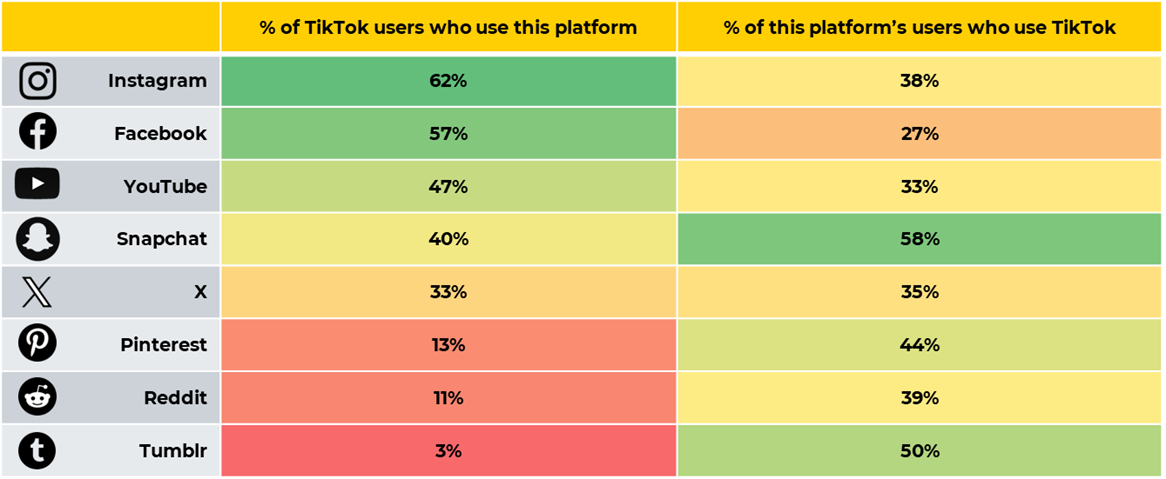
While TikTok has a huge cultural role and impact, shaping trends, influencing fashion and music, Gen Z are able to lean on other platforms for different uses. With 62% of TikTok users also on Instagram and 47% also regularly using YouTube, it’s likely that we’ll see an influx of TikTok users on these platforms to create and share their short-form content.Alternative Platform Usage

Source: GWI Core, Waves: Q1 – Q4 2023, Social Media Platform Usage: Daily, More Than Once Daily, Base: Regular TikTok users

What it means for marketers:

As we move forward, there is a sense of unknown surrounding ByteDance’s next steps: both the total ban of TikTok and its sale face potential hurdles.

Not many companies can afford to buy TikTok. With US revenue between $16 billion and $20 billion in 2023 (The Information) a valuation of $100 billion doesn’t seem far-fetched. Companies like Meta have the problem of anti-competition laws while another possible deterrent is whether TikTok’s recommendation engine, which is responsible for the platform’s addictive algorithm, would be included in the sale (Reuters). Without it, it’s hard to believe that the new owner could emulate the core component of the platform that users love.

If ByteDance choose not to sell, TikTok would not immediately disappear from phones. It would however disappear from Apple and Google’s app stores, so users won’t be able to download it and it also means that updates, security patches, and bug fixes won’t be sent, making the app eventually unusable.

If TikTok does not sell and slowly becomes defunct, then we may shift towards a new media landscape that benefits Instagram, YouTube, and even Snapchat who have the highest share of users who also use TikTok at 58%. Whether platforms will shift to prioritise short-form video content to help fill the gap left by TikTok will be interesting to see, but what’s for certain is marketers need to evaluate where the opportunity for their brands can be found across other social platforms.

For marketers, either US-based or running activity in the US, if you haven’t already, it’s time to start considering what the absence of TikTok means for your media plans and budgets.

USA TikTok users spend an average of 3 hours and 02 minutes on social media (GWI Core), and we know that TikTok users are likely to be on Instagram and YouTube in particular, so upping investment in these channels means driving impact with your audience is still possible. The vertical short-form aspects of these platforms also mean your curated TikTok creative can still apply to stories and reels on Instagram and shorts on YouTube.To find out more on how ROAST can support your business, or more specifically to find out more about a ban on TikTok get in touch here.

Powerful LinkedIn Ads updates to enhance your audience strategy.

LinkedIn has recently released two hugely useful, albeit easy to miss, updates. These updates will help us to plan and optimise campaign strategy on the platform, and to simultaneously align with sales teams. When it comes to running ABM on LinkedIn, it is important to review your data and content regularly to push your target lists through your marketing funnel.

It requires far more than simply placing an ad in front of someone you want to work with and hoping that’ll do the trick.

Enhanced Company Engagement Data

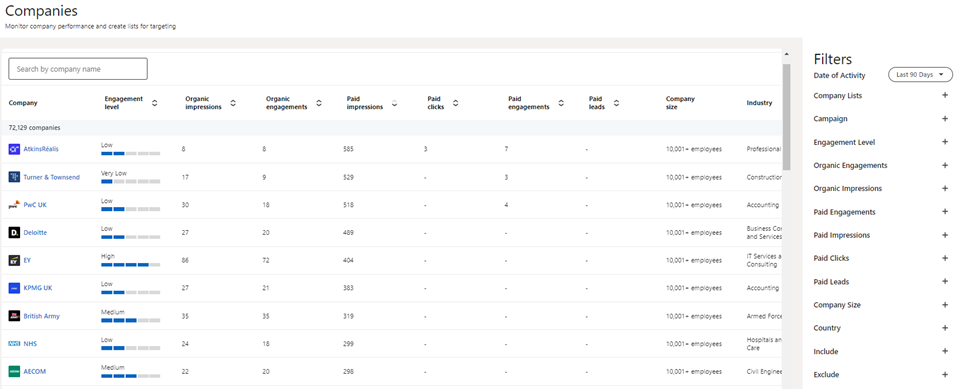
The first update LinkedIn have introduced is a detailed breakdown of company engagement on your ads and organic profile based on your uploaded company lists. The report below highlights the ad delivery against certain companies, their level of engagement, and exactly which lists they belong to – making for easy filtering and organisation.LinkedIn Updates You Might Have Missed

LinkedIn Companies Report

There are a few benefits to this update that we want to use to our advantage here at ROAST: Firstly, companies showing high engagement can be priority targets for the sales team. With this new update, new targeted content can be created in the next stage of a campaign to drive a lead to take the next step. We can exclude companies which show high delivery but low engagement, or those that may not have been matched correctly in the first place – a potential issue when relying just on company names for matching.

Another great aspect of the update is that these reports are highly filterable, allowing you to home in on specific campaigns, audience lists, or objectives.

While this exportable to be manipulated further, LinkedIn does strip out lots of information relating to Organic engagement as well as the company information. It is still possible however to retrieve the data on a regular basis to view engagement against target account engagement over time. After all, this is fundamental to measuring the success of a long-term ABM strategy. For example, in a niche B2B industry, your targets aren’t realistically going to become customers off of the very first ad they see – especially when whole buying committees are involved.

Understanding Audience Depth Reached

The second update from LinkedIn is also a massive help in understanding your audience penetration.

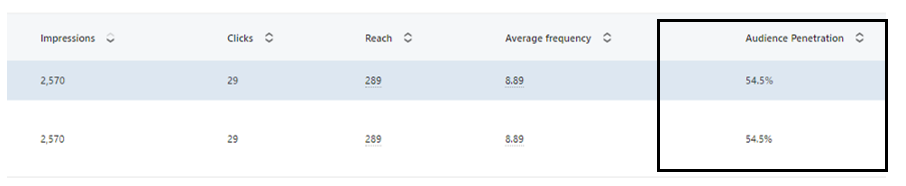
The aptly named metric will show you what percentage of unique users in your audience have been reached by your campaign. You’ll naturally expect this to start low and grow over time, as hopefully more of your target audience are exposed to your campaign. While you shouldn’t expect it to ever reach to 100%, if you spot a high audience penetration – alongside a strong frequency – it is a clear indicator that this is the audience you should be targeting with your next stage of ad content or targeting them with a lower funnel optimisation objective.LinkedIn Updates You Might Have Missed

LinkedIn Audience Penetration Metrics

Another consideration when it comes to this, is the audience size you’re aiming for in the first place. Before now, LinkedIn have typically recommended an audience size of 50,000 as a minimum, but this new update can indicate whether your audience size is too big or too small. If you’ve been running your campaign for a month and your penetration is still low, you could look at a higher budget to expand your reach or reduce your audience size if it is too large to make an impact on the audience you want.
A combination of these new tools will be powerful for ensuring your target customers are being nurtured effectively and are seeing the right content at the right time. When you consider the other options already existing in LinkedIn, including the demographic reports to view who is seeing your ads based on seniority or job function, you can start to get a detailed view of exactly who you are reaching and what the next stage of your strategy should be.
Find out more about ROAST’s B2B services

The TikTok Exodus: How a Ban Could Redefine America’s Social Media Landscape

The potential ban of TikTok in 2025 could reshape the social media ecosystem. As many have likely seen, America faces a social media plain with no TikTok – or rather, no TikTok as we know it.

This weekend, on January 19, the US Supreme Court is set to rule on a law requiring TikTok to either sell to a US buyer or face a ban in the country. Following this proposed ban, TikTok may remain on devices but will be unavailable for download from app stores. Without updates, the app will become increasingly dysfunctional. If ByteDance, TikTok’s parent company, sells to an American buyer, the platform’s signature algorithm—the engine behind its hyper-personalized and addictive experience – may transfer with it. Yet, even with the algorithm intact, TikTok without its original creative essence would likely feel like a shadow of its former self.

These are the facts. They’ve been widely covered. Let’s now ask: what does this potential ban mean for the marketing landscape? Is it, in fact, that consequential? And will a TikTok ban affect the social media landscape as much as people predict?

We think not.

An absence of TikTok might be momentarily disruptive, but not for long. Users will disperse, migrate, and move on to the next best thing.

Where Will Users Go?

Given the overlap in audience demographics, Snapchat, YouTube and Instagram will likely absorb a significant portion of TikTok’s user  base. But there’s another contender making waves: RedNote.

Enter RedNote: A Refuge for the “TikTok Refugees”

In the past month, RedNote has become the top downloaded app in the US. Much like TikTok, it combines short-form video content with e-commerce capabilities. Owned by Shanghai-based Xingyin Information Technology, RedNote boasts over 300 million monthly users. It’s familiar, yet distinct enough to attract curiosity and attention.

However, RedNote’s Chinese ownership could be a double-edged sword. If concerns about data privacy and security are the core reasons for TikTok’s ban, RedNote’s similarities could make it a problematic alternative. For instance, the app reportedly collects users’ IP addresses, raising similar questions about data sharing and surveillance. It’s a lateral move rather than a forward one.

The Evolving Social Landscape

The potential TikTok ban will undeniably affect consumer behaviour. Many users no longer treat social platforms purely as sources of entertainment. Increasingly, they serve as tools for search and discovery, often at the start of a user’s decision-making journey. For marketers, this shift underscores the importance of adapting to new platforms and strategies quickly.

While many TikTok users might flock to RedNote, the broader social media landscape will likely adapt faster than expected. Consider the rapid transitions of the past: MySpace gave way to Facebook, which evolved into today’s diverse ecosystem of apps. Social media is constantly reinventing itself, and this time will be no different.

What Will Be the Next Shining Star?

Will a brand-new platform rise to fill the void? Or will existing giants like Instagram, YouTube Shorts, or even RedNote capture the displaced audience? One thing is clear: adaptability will be key. Leveraging high-quality consumer data to spot trends early will separate winners from losers in the race to replace TikTok.

Our Recommendation

Brands and marketers must remain agile. Build a multi-platform presence and ensure you’re prepared to pivot as user behaviours evolve. Staying informed about emerging trends and consumer preferences will be crucial for maintaining relevance.
Here is what ROAST’s Aimee Metcalf, Content Organic Performance Lead, has to say on the subject:

“The potential TikTok ban will be problematic for brands targeting the Gen Z audience or looking to drive overall brand awareness in the US. However, regardless of whether TikTok is removed in the US, the global need for short form video and user generated content will still remain a priority for brands in 2025.We know users are continuing to increasingly favour short form video content as part of their search journey (particularly during discovery) across various platforms, not just TikTok. Short form video content will remain an opportunity for brands to reach their target audiences through not only Google searches but socials such as:

  • YouTube (shorts)
  • Instagram (reels)
  • Facebook (reels)
  • LinkedIn (video feed)

Short-form video content is here to stay, and brands should continue investing efforts here to drive long term growth. Video platforms come and go (much like Vine) and video formats will likely shift, but as it stands, short form video content is here to stay and shouldn’t be neglected by brands in the wake of the potential TikTok ban.”

Sign up to the ROAST Newsletter to stay informed!