
The resurgence of long-form content
In the age of AI where audiences are craving deeper and more meaningful connections we’re witnessing a resurgence of long-form written content. And with this increasing shift in user behaviour, Substack is becoming the platform of choice by both creators and brands to deliver value-driven content to target audiences.

With highly tailored social media algorithms and increased AI responses now dominating audiences’ online experience, there’s now an increased desire among audiences (particularly Gen Z and Millennials) for deeper and more authentic longer-form content – this is where Substack comes in.
Substack hot stats
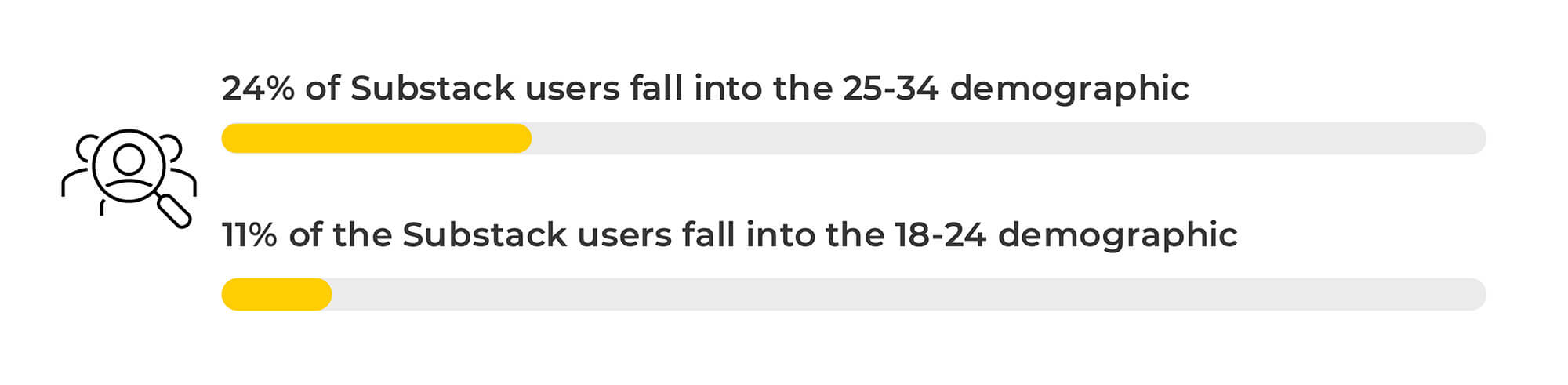
The below stats highlight the increasing popularity of Substack among users both worldwide and particularly among UK users.
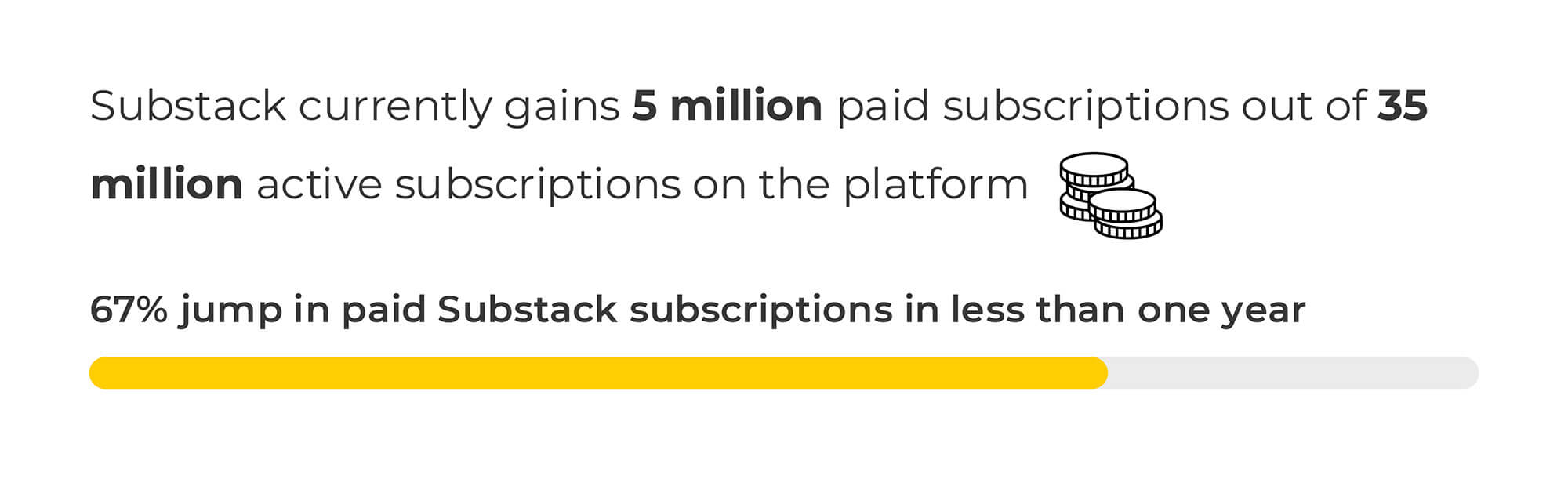
Substack’s paid subscriptions continue to grow:
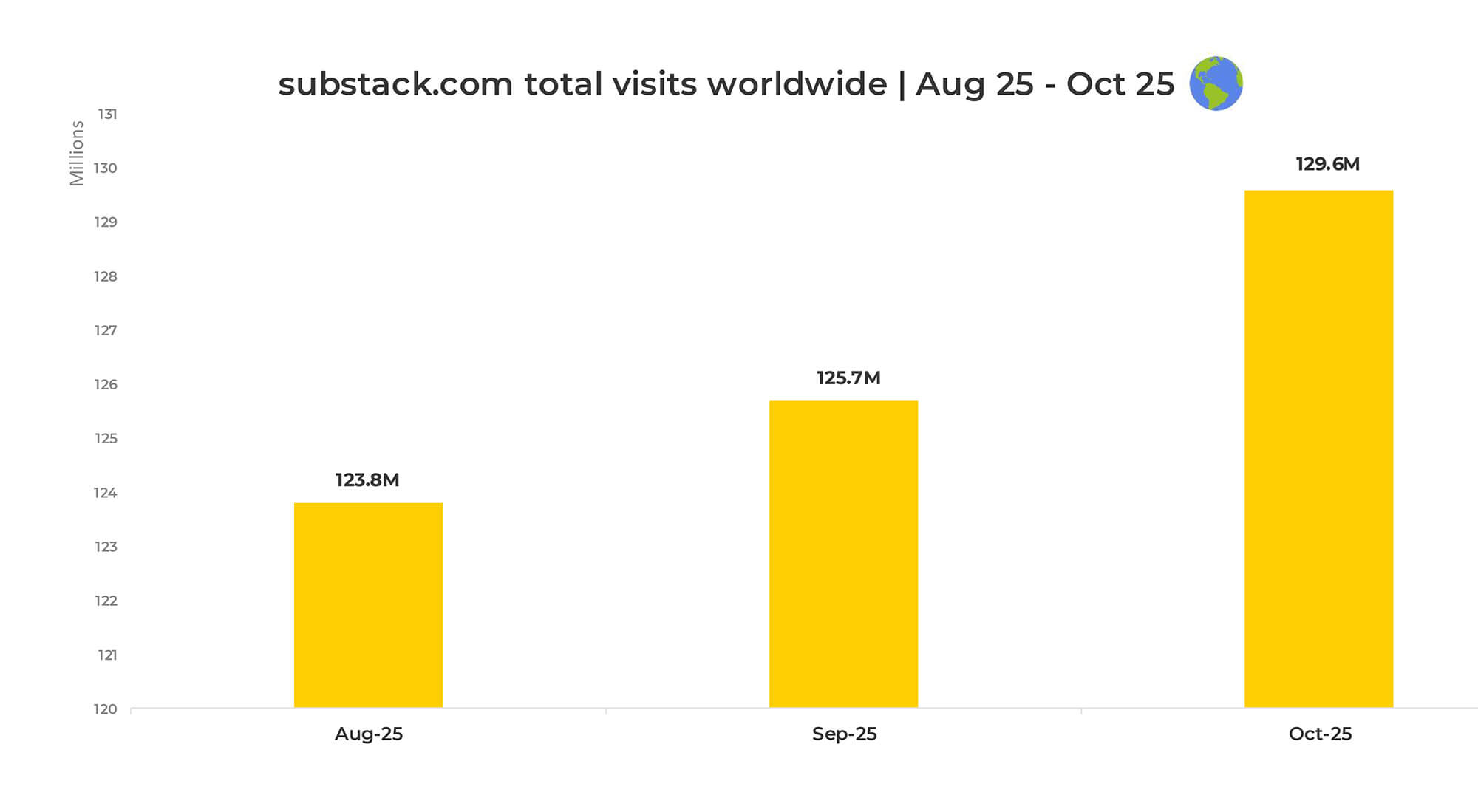
Visits to substack.com are on the rise:
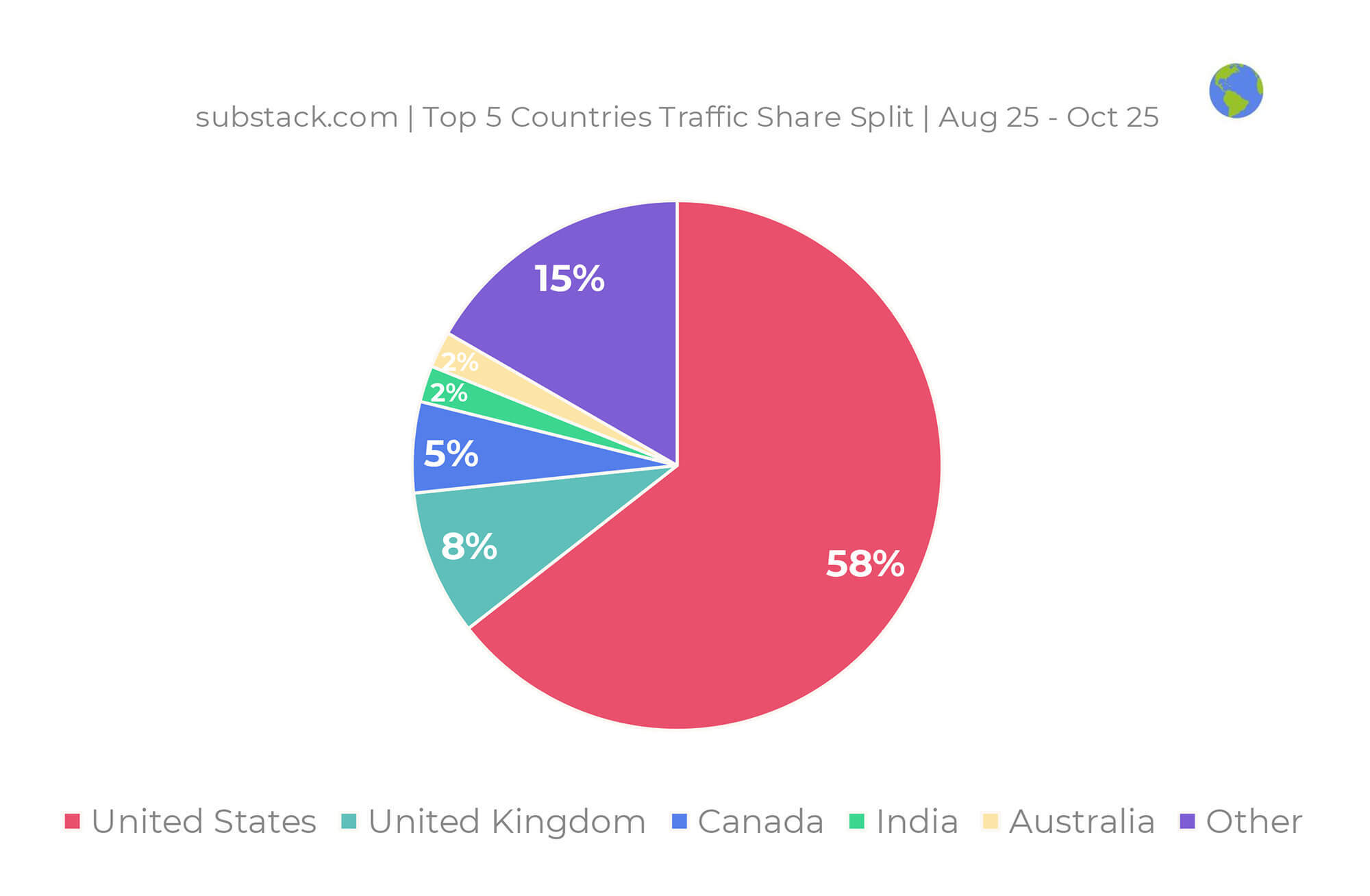
The United States accounts for the largest share of visits to Substack.com:
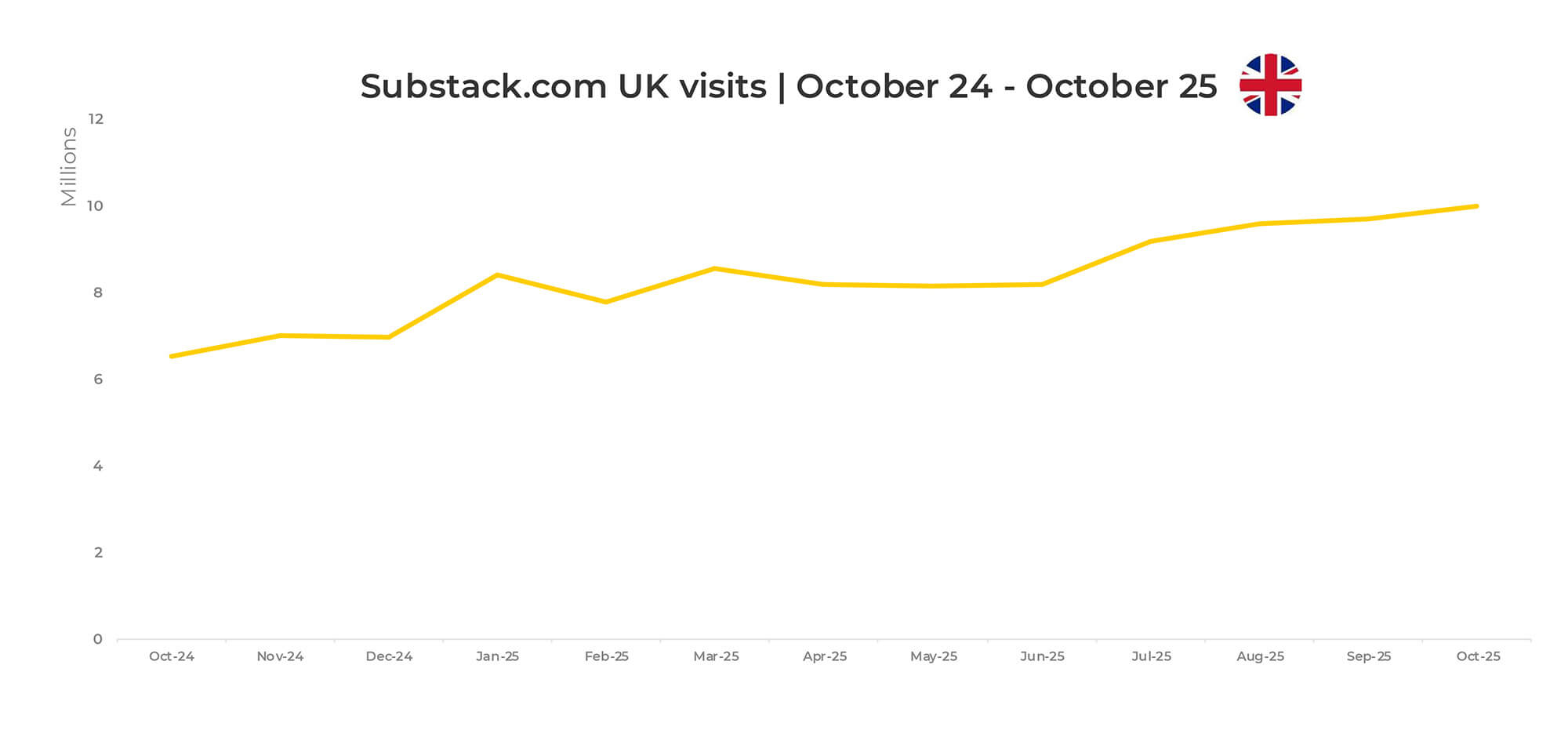
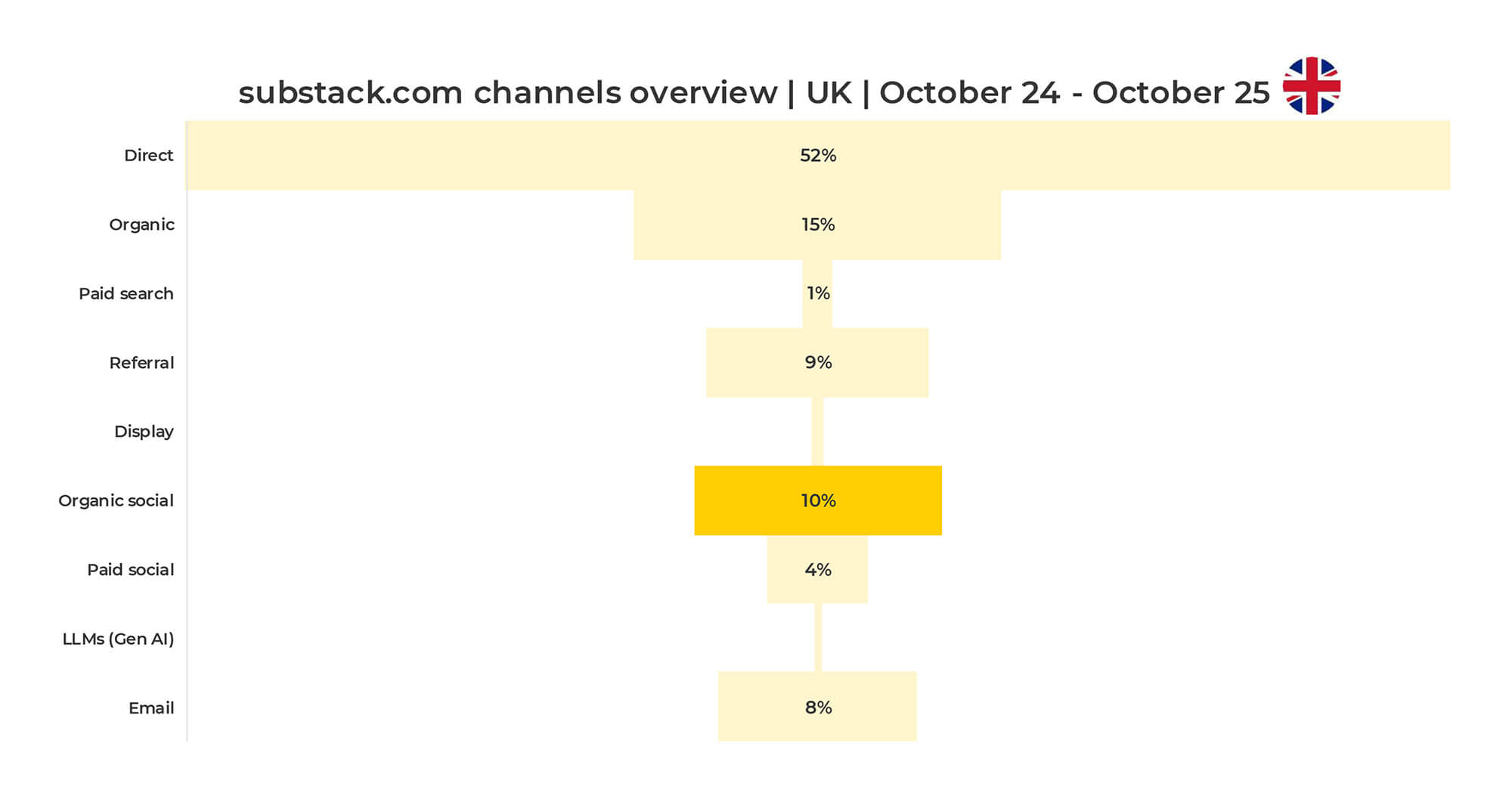
UK visits to Substack.com have been steadily increasing over the past 12 months:
So, what exactly is Substack?
Substack started in 2017 as a niche newsletter and subscriber network with a view to help writers monetise their work. Now, users typically engage with the platform to both read and/or share everything from news articles, opinion pieces, creative writing, videos to essay style content.
Substack’s main function is connecting the creator and the consumer, by combining features of blog style content and email newsletters delivered directly to subscribed reader’s inboxes.
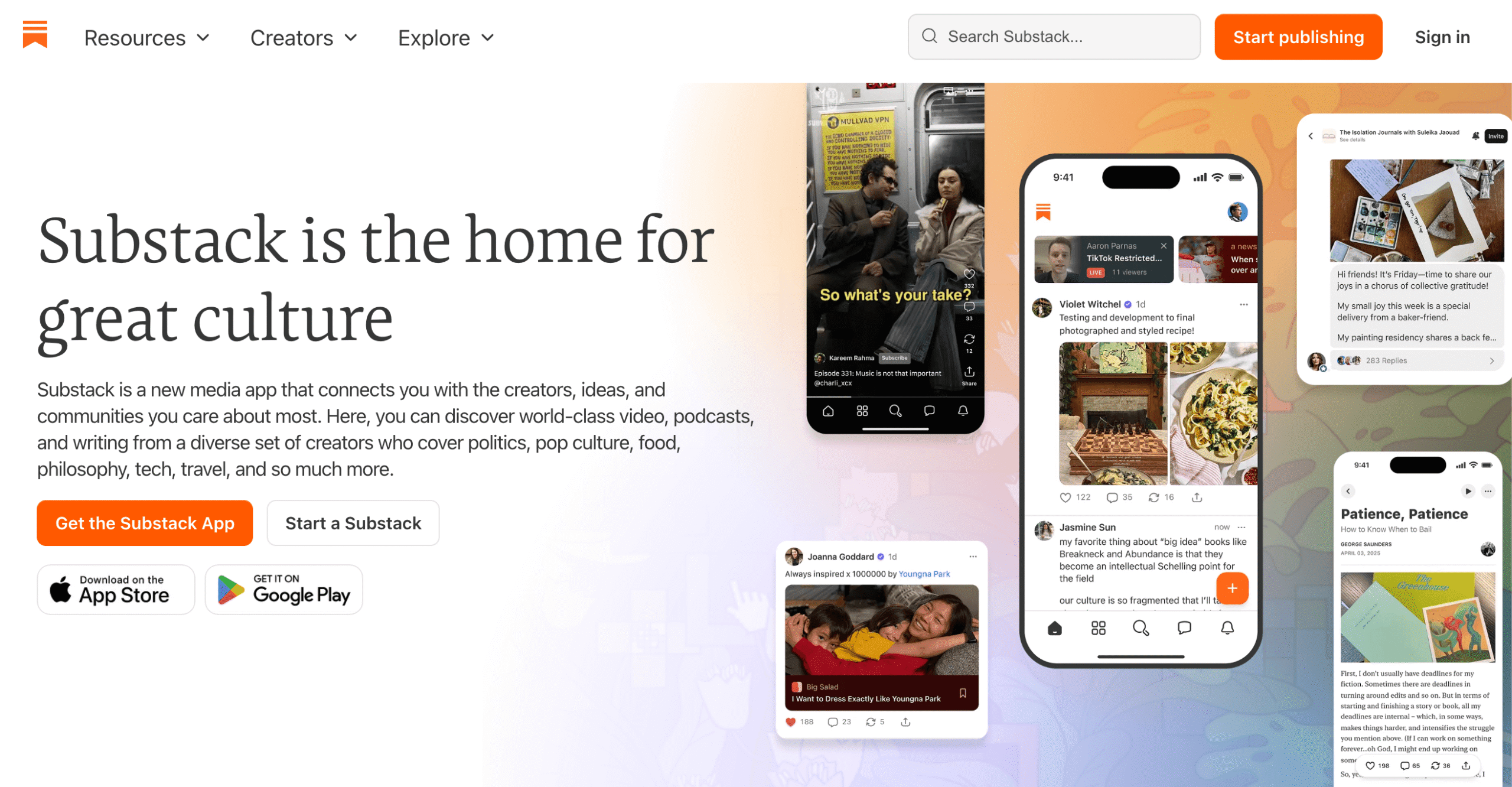
Substack creators have the option to provide email newsletters directly to their audience on either a free or paid basis, with Substack earning a percentage of the subscription revenue. Users also have the option to discover free written pieces directly within the platform, without having to subscribe. While the platform is primarily text-based, it offers four main formats for posts:
- text-based posts
- podcasts
- discussion threads
- videos
Typically, Substack is a great channel for:
- thought leaders / niche experts (this is where your brand comes in)
- independent writers / journalists
- creators / Influencers
- podcasters
Many brands already maintain email marketing lists, but Substack newsletters are emerging as a new way to engage audiences by fostering deeper community and loyalty. With built-in features like likes and comments (available only on the site or in the app) readers are drawn out of their inboxes and back onto the platform, making Substack feel closer to a blog than traditional email campaigns.
Using Substack in your content marketing strategy
Firstly, you need to identify if Substack is an appropriate channel for your target audience. We know that Gen Z and Millenials are go-to groups for Substack – but the channel also works well for niche topics.
As it stands, brands are now only starting to invest in Substack as part of wider content marketing efforts: According to Substacks content guidelines:
“Substack is intended for high quality editorial content, not conventional email marketing. We don’t permit publications whose primary purpose is to advertise external products or services.”
So given the above, this doesn’t prevent brands being on Substack, instead Substack challenges brands to “think outside the box” of how they can utilise the platform and the unique value they are offering to audiences without overtly advertising products.
Rare Beauty (by Selena Gomez) is a smart example of a brand creating high quality authentic, written content where products are seamlessly integrated within the content.

Substack = relationship channel (audience first content)
NOT a sales channel
For your brand to win Substack, prioritise the below:
- create unique and tailored content
- promote internal expertise and authenticity always
- prioritise high quality and specialised insights
- embrace niche topics in your area of expertise
- build a community
- consistency! Producing high quality content over-time will allow your brand to earn loyal subscribers
- always, avoid being overtly commercial or sales heavy
Ultimately, content that offers unique insights, expert analysis, or niche content tends to perform best on Sustack since this type of content provides value that readers can’t easily find elsewhere. This is what your brand should be striving for when it comes to Substack.
The content formats which can work well for brands:
- thought-leadership newsletters
- editorial columns
- expert opinions from founders and Internal team members
- creator / influencer collaboration: guest posts or co-authored newsletters
- industry analysis
- break down news / market trends
- behind the scenes content for products, new features, campaigns etc.
- interviews with team members or leaders within the industry
- how-to guides / best practices
- advanced tips
- mini publications
- podcasts
The above also depends on your brand’s Industry.
What’s worth noting, brands don’t need to take the pressure of building out their Substack visibility alone. Within the platform there also lies the opportunity to collaborate with relevant Substack creators within your niche to build your reach or consider engaging in affiliate links within popular Substack newsletter
Brands winning on Substack
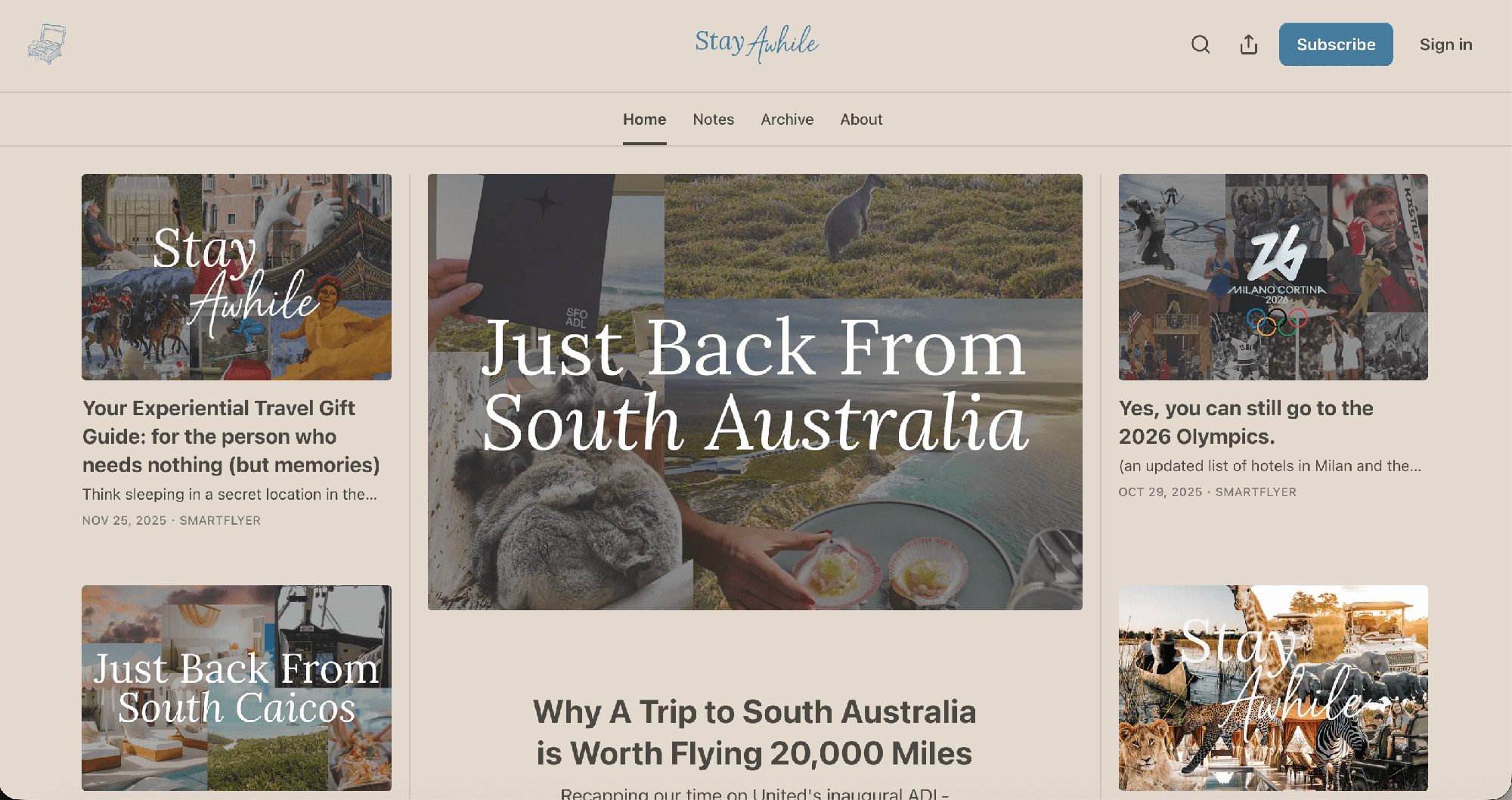
SmartFlyer – US based luxury travel agency
The ‘Stay Awhile’ substack has allowed the brand to further validate its reputation as the destination for exclusive travel expertise while differentiating the newsletter from its existing email and content marketing efforts.
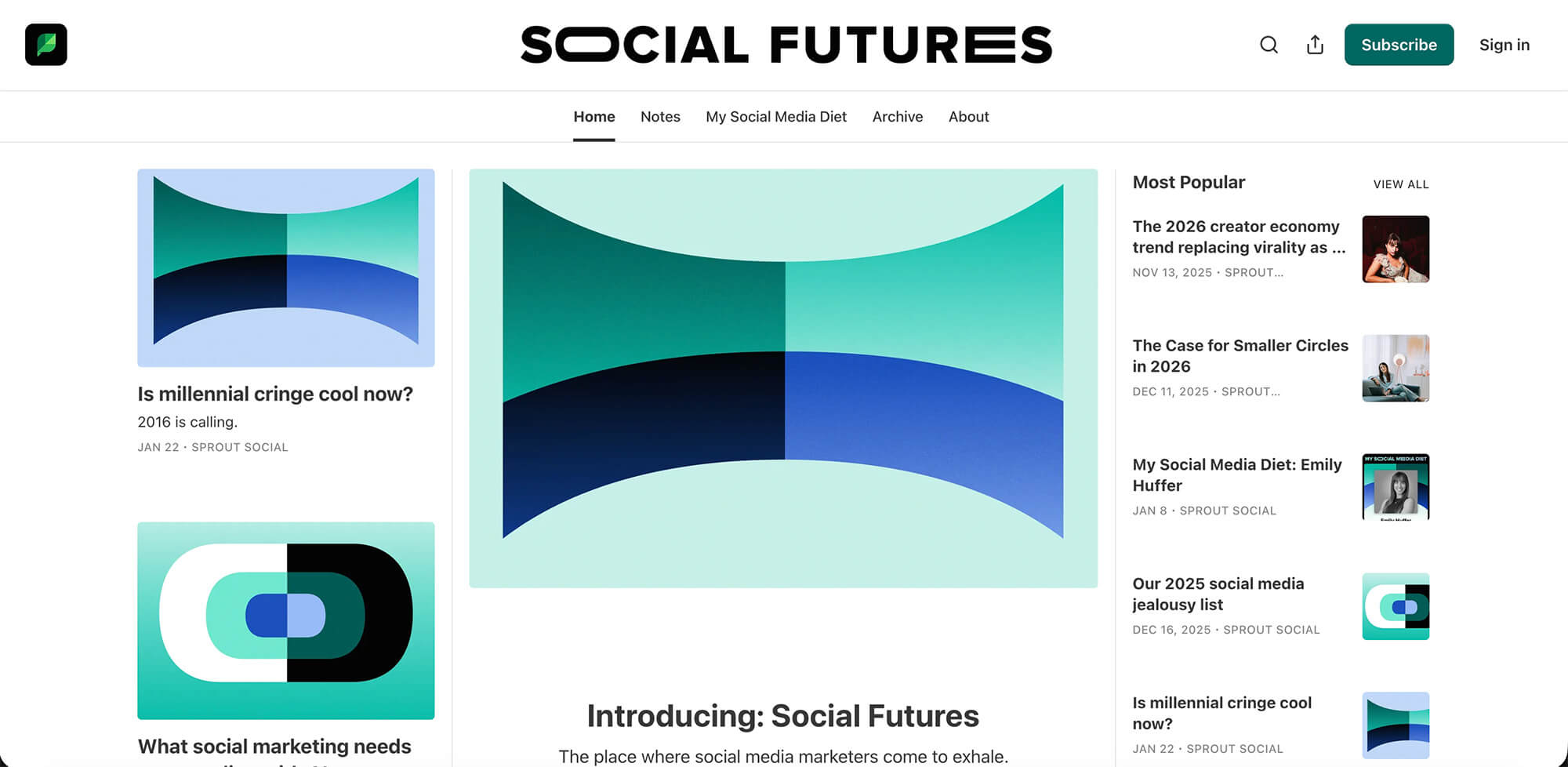
Sprout Social – Social media management platform
Social Futures substack provides social media professionals with content like expert interviews, tips, and research-backed insights allowing the brand to provide in-depth content that complements its primary software and reporting services seamlessly
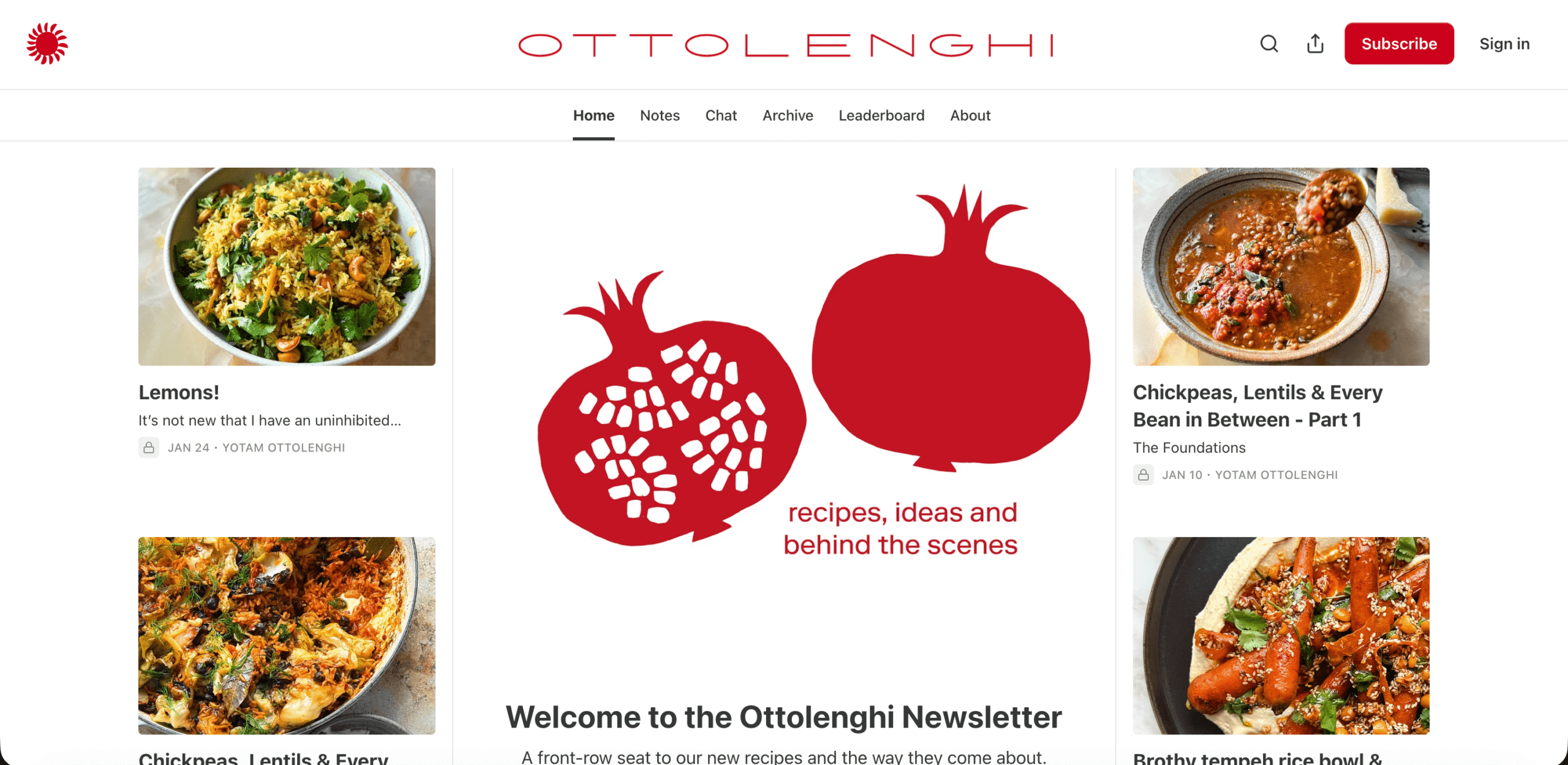
Ottolenghi – Food brand
Ottolenghi substack builds a more meaningful connection and community with target audiences by going beyond just recipe content, the Substack also includes tips and tricks for all food related topics.
Loftie – Wellness company specialising in sleep
‘Little Book of Sleep’ Substack features a consistent mixture of sleep related tips, guides, and advice. Loftie uses its Substack to showcase its subject knowledge and expand its brand reach beyond its core marketing mix.

Short and long-form content: a winning mix
Whilst we’ve discussed the growing need for long-form content as part of your brands wider content marketing efforts, this doesn’t mean brands should be abandoning short-form content efforts altogether, instead, both formats need to be integrated to win.
Discovery → Loyalty
When short-form and long-form content are used together, we’re able to reach target audiences at every stage of the funnel, from discovery to loyalty.
From analysing UK website visitors over the last 12 months, we can see that the 3rd biggest traffic driving channel to the site is Organic social. This suggests creators / brands / users are likely utilising socials such as TikTok and Instagram during the discovery phase, and then leading these same users to Substack to learn more (loyalty).
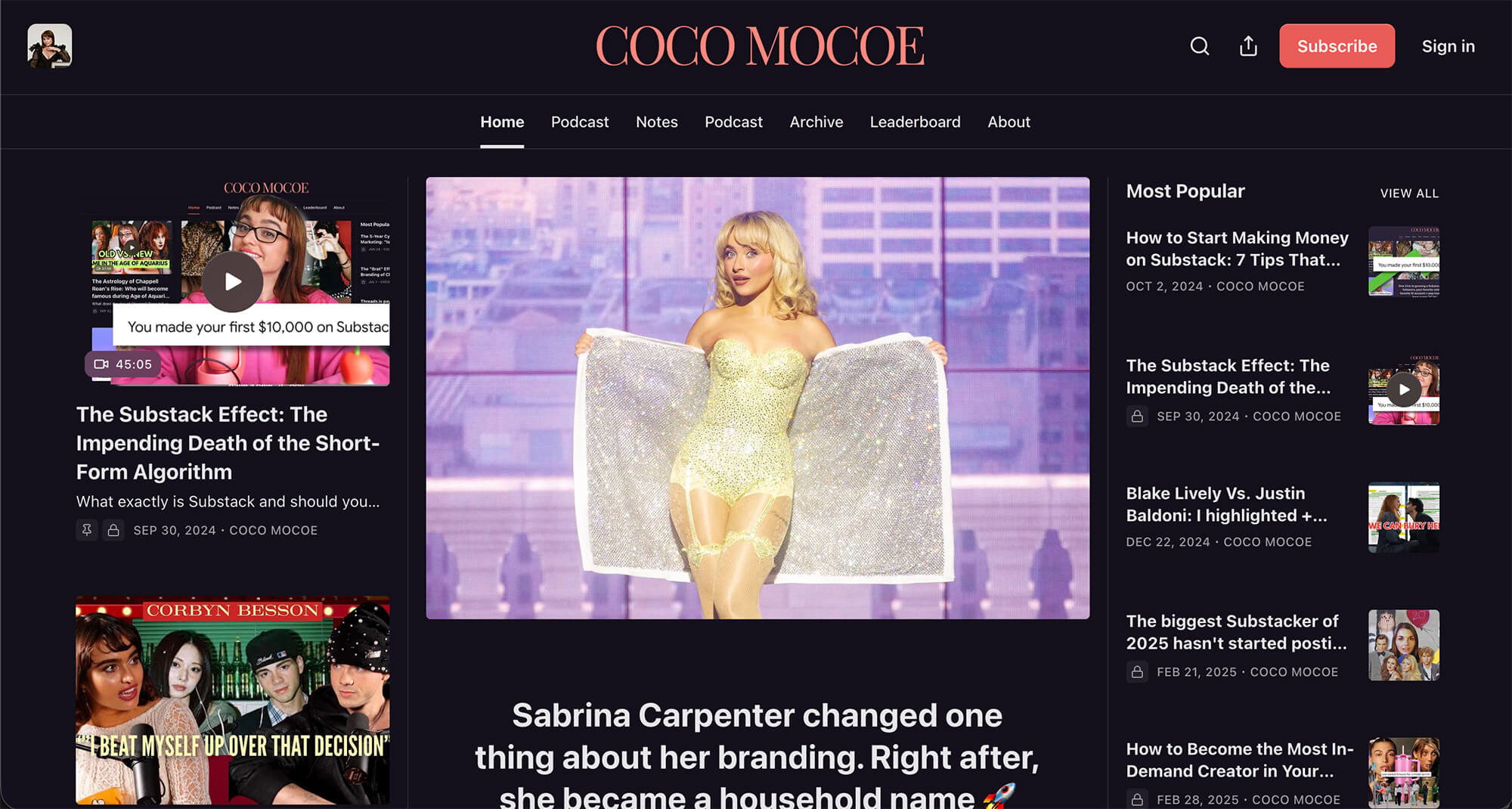
Creator example: Coco Mocoe
Mocoe is a content creator specialises in analysing both digital / pop culture trends from a marketing and branding perspective and boasts over 1.1million followers on TikTok. Creators like Mocoe are a prime example of a creator harnessing the power of their audience on TikTok (short-form content) and then drawing them over to Substack for richer detail (loyalty).
Substack’s role in search
Substack first and foremost should always be used by brands as a means to create authentic, unique and expertise-led content to build connections with audiences. According to Substack’s content guidelines.
“Substack is intended for high quality editorial content, not conventional email marketing. We don’t permit publications whose primary purpose is to advertise external products or services, drive traffic to third party sites, distribute offers and promotions, enhance search engine optimization, or similar activities”
With the above in mind, we know the importance of not creating content on Substack to solely benefit our marketing efforts, and especially search efforts from both a Google search (SEO) and AI search perspective (GEO). However, what we’re seeing for industries like fashion and lifestyle in particular, producing written content on Substack indirectly benefits a brands wider search efforts.
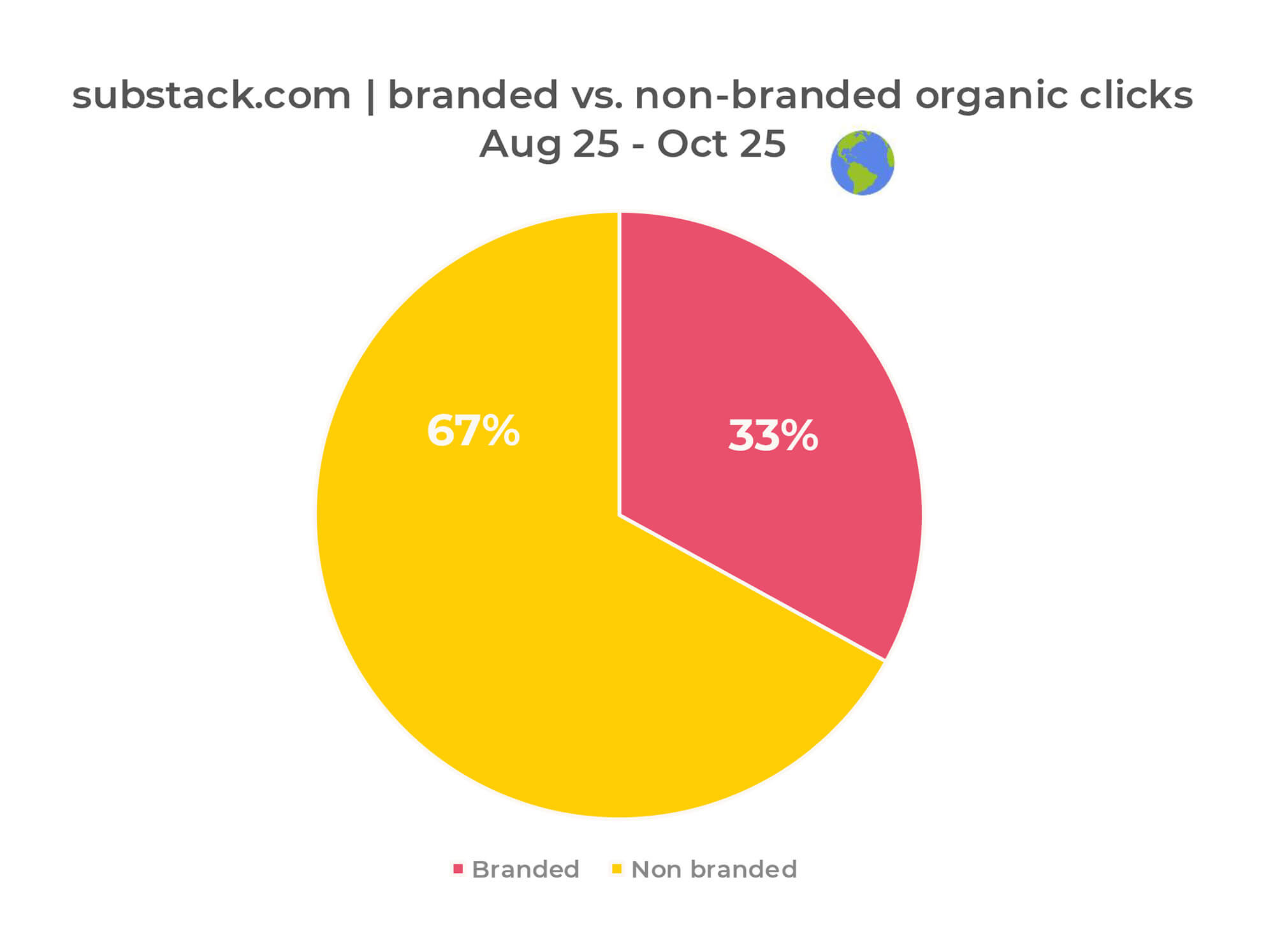
For example, when we analysed the top generic queries (those not containing “substack”) to substack.com worldwide from August 2025 – October 2025 we can see the majority of traffic driven to the site is generic (67%):
and when we segment this to UK traffic only, we can see that the majority of non-branded traffic to substack.com comes from lifestyle (especially recipe) related terms:
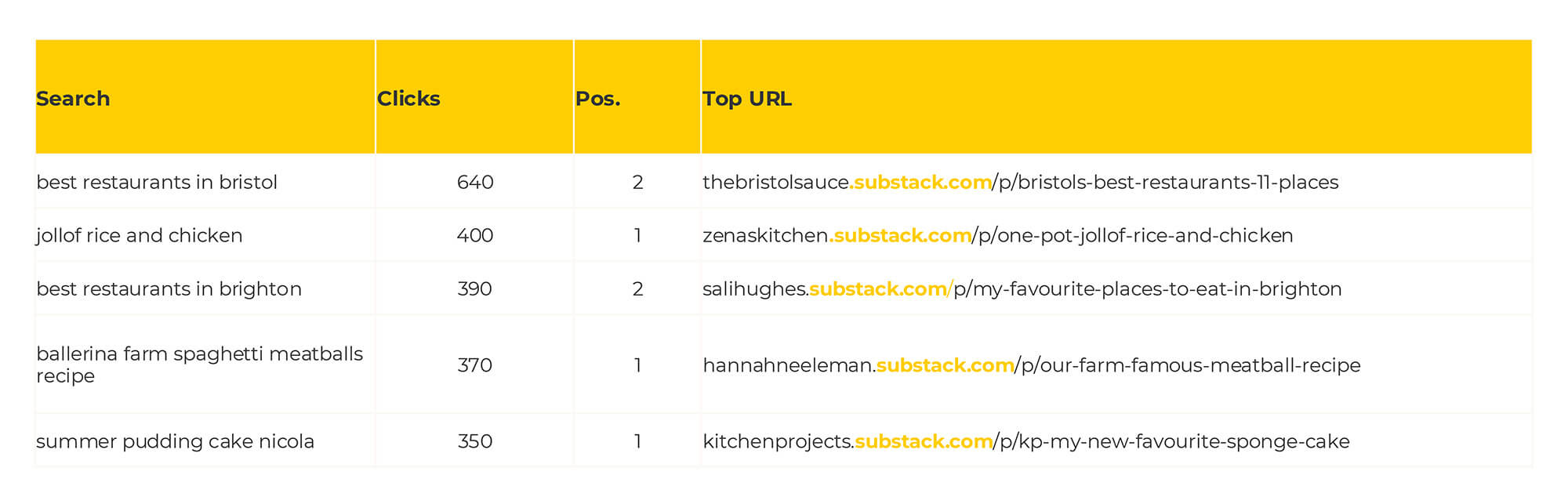
From an AI search perspective, we also know that AI search results can pull content from Substack as a means of both training AI models as well as generating results within a given AI search. Worth noting, Subtack does provide a feature for publishers to block AI training for Substack writers content (“block AI training” option within the platform).
Takeaways
The resurgence of long-form content gives brands the opportunity to build deeper connections with audiences, especially in an AI-drive landscape. And for brands aiming to increase visibility, Substack can be a strong addition to your wider content marketing strategy.
When it comes to Substack what must always be prioritised by brands is producing value-driven, expertise led and original content over the desire to sell products. By taking this approach, your engaged audiences within Substack will eventually seek you (and your products) out themselves.
Find out more about Why Substack Is Becoming the New Home for Authenticity and Brand Trust in New Digital Age.