Brighton SEO Review

This month ROAST’s SEO team made the trip down to Brighton to enjoy the sea, the sun and Brighton’s bi-annual SEO conference. We regularly encourage our staff to attend external events to keep up to date with the latest industry innovations.

Below, the team have pulled together some top tips and key insights from their day in Brighton, covering subjects from API’s to JavaScript to Advanced Keyword Research.

Javascript & Frameworks – Bartosz Góralewicz 

Bartosz Góralewicz provided some useful insights in his talk, Can Google properly crawl and index JavaScript? SEO experiments – results and findings revealed,  in which he concluded that that even Google itself, is still not perfect at crawling Javascript, but he gave some top tips as to how to get the most accurate outcome.

The below table, taken from Góralewicz’s research, provides an insight into which frameworks to use if you have developer’s keen to use JavaScript. As you can see, React, jQuery, Vue.js and Vanilla/Plain JavaScript passed all four stages of indexation and therefore would be the best options to test.


Making sure your JavaScript is inline rather than external, can also make a huge difference as to whether Googlebot crawls the page because;

  • ‘Not all JavaScript frameworks are crawled and indexed in the same way’
  • ‘JavaScript generated links aren’t always crawled’
  • ‘Inline vs. External JavaScript makes a huge difference’
  • ‘Angular JavaScript two must always be server rendered’

We also should remember that Google is not the only search engine out there, and through using JavaScript, support will drop off from search engines such as Bing, Yahoo, AOL. etc.

The best approach to using JavaScript in SEO, is through employing Isomorphic JavaScript, on React and Angular.

Despite Góralewicz’s guidelines being useful for those planning on using JavaScript, remember that Google still might not be able to read the JavaScript perfectly, and it is always worth considering all of your options before making a final decision. If it’s too late for you, and your site is already JavaScript-heavy, you can use a service such as  Prerender.io which will create a HTML snapshot of your site to the search engines.

Final tip; Chrome 41 is the same as rendering as GoogleBot, which is great for de-bugging!

API’s In Search – Yiğit Konur, Kostas Voudouris & Stephan Solomonidis

In the next sessions, various speakers provided insights on how to take advantage of APIs, without the need to learn a new coding language or utilise the skills of a dev (too much).

The talks focused on recommended tools to use to simplify and improve your confidence when working with API requests. All the suggested tools pave the way for insightful applications in SEO, and could even potentially be expanded into further reviews and processes outside their suggested applications.

Yiğit Konur, in his talk, Connecting APIs without Coding Skills to Create Your Own Dashboards, suggested the use of drag and drop workflow creation through using data mining tools RapidMiner and Knime, to help simplify your GET request and output data filtering. Such tools can also be used in other applications, such as to create automated workflows for data mining and processing.

Kostas Voudouris walked through the creation of performance based monitoring and optimisation using the search console API and Google Sheets in his talk Performance-based optimisation using Google Search Console API. Doing this enables you to monitor your visibility for new search queries, and it also provides a large data source for large scale content analysis and keyword optimisation.

Stephan Solomonidis suggested using IBM Whatson to allow for simplified API requests for NLP reviews. This tool allows you to identify common themes with SERP listings and keyword sets, or, if you’re feeling brave, can enable you to build your own knowledge graph using IBMs knowledge Studio.

At ROAST, we have a selection of tools that utilise APIs to gather data at scale, such as page speeds, knowledge graph data to name a few.

Advanced Keyword Research – Kelvin Newman

Kelvin Newman, the founder of Brighton SEO, gave an interesting talk, Scary SERPs (and keyword creep), on keyword research and how we as SEOs, need to think differently about the future of keywords and keyword targeting.

A few years back, keyword targeting was as simple as replicating a keyword onto the page as many times as possible, in the hope that Google would think ‘Okay, ‘car insurance’ has been mentioned 50 times on this page, it must be about car insurance and therefore worthy of ranking’, and nine out of 10 times, it would have worked.

Now though, Google recognises so much more than this and is constantly improving its algorithm to understand intent and a sense of what the user is really searching for, many based on IA. So, when creating a page about a topic it’s about including all the phrases within the topics semantic field and enough content that a user and Google would expect to see. As well as incorporating “off the shelf” options (such as machine learning/NLP tools), Newman suggests taking the top ten search results for the query of your topic, and extracting the text from the pages. Once you’ve done this, take all the words from the pages and put them into a word cloud, which will give you a visual prioritisation of how often words are being used for the given query:

Once you’ve done this, it should help you better understand what keywords and phrasing you should be including on your site.

As clever as Google is, Newman hones in on voice search, particularly the Google home voice assistant, and the ‘one true answer’ trend, which is when featured snippets go a tad wrong.

When you search for something on Desktop, you’re presented with the traditional 10 listings on page one, with a featured snippet appearing in “position zero”. You’re then given the choice between clicking the snippet, or any of the other 10 listings. If you can see that the snippet is misleading or incorrect, there is an option to give feedback about the result, which Google would quickly see to.

However, when searching with a voice assistant, you’re only given the ‘one true answer’, which in some cases can produce inaccurate results as can be seen in the example below:

Don’t always trust what Google says…

Newman also spoke on machine learning, and as mentioned earlier, Google’s continued efforts to understand what it is we’re searching for. For example, if you were to search for ‘computer game with Italian plumbers’, Google is now able to recognise this as Mario:

This means that not only does Google understand the keywords, but it understands the whole context of a given query, and sees the connections below the surface, to make sure you’re served the best result. Today’s keyword research is all about understanding our clients’ needs and motivations. This, will help us figure out how to create the best keyword targeting strategy.

AMP – Aleyda Solis

On average, 60% of searches are now conducted via mobile. As page speed is a large user experience factor for mobile users, there is now a high demand for optimising site speed to reduce bounce rate.

Google released AMP to help improve page speed for both big sites which have restrictive legacy systems, and small businesses with too little resource to improve their speed. AMP uses simplified HTML, with optimised resources, to server stripped down versions of pages. In her talk, Setting AMP for Success, Aleyda Solis shed light on successfully implement AMP in web design.

According to studies into site speed, people expect pages to load within two seconds and sites must abide by this to avoid customers from leaving mobile sites which in turn will decrease conversions.

For e-commerce companies, the consequences can be devastating. According to Qubit, ‘Online retailers lose an estimated £1.7bn in global sales each year due to slow loading speeds.’ The image below shows the bounce rate as the seconds tick by:

AMP gives everyone a way to create lightweight and fast pages for mobile users.

Technical SEO IA – Dominic Woodman 

In his talk, Advanced Site Architecture – Testing architecture & keyword/page groupings, Dominic Woodman explained that Site IA refers to the structure of internal links that search engines use to understand relationships across a website, but more importantly, IA represents a huge opportunity to match up templates and pages with a specific user intent.

Answering some simple questions about the expected steps in your customers’ journey on your website, and how to reach them, should provide important cues about where pages should sit and which keyword(s) they should include.

Matching keywords and their intent to a page template can be done through semantic analysis and a good deal of iteration. Identifying the need for new template creation can be as simple as looking at SERPs and asking yourself the following questions;

GTM for SEO – Sebastian Monnier

In Sebastian Monnier’s, How Google Tag Manager Can Help your SEO, he explained that one of the benefits of using Google Tag Manager (GTM), is that it allows ad-hoc injection of JavaScript strings and bypasses the need to hardcode everything and therefore makes the code “lighter”. So, if you are not able to implement changes to your clients’ website you could use GTM to make those changes.

Monnier argued that it is in fact possible to rank for keywords that have been injected into the title and description tags with GTM, even though they don’t appear in your HTML code. One reason for injecting keywords through JavaScript, would be for websites that have faceted navigation (e-commerce), or for campaign pages for example. GTM makes it possible to scrape parts of the HTML code and push that into the meta tags and Monnier has showed case in point that it wouldn’t prevent your pages from appearing in SERPs.

Final tip; this also works for injecting nofollow tags, noindex tags and canonical tags.

In the coming months, the team will be at STAT’s City Crawl event and Google’s AMP Roadshow, keep an eye out for the write ups.
Time, UX and Search; Oh My!

Quick! What are you talking about? What are you writing about? If you just looking at this post makes you think TL;DR* then you can scroll straight down to the conclusion… I won’t hold it against you.


I’m busy. Very busy. My life is all pings and notifications and that annoying double buzz my phone does to keep me aware that there are Many Important Things happening right this second. I couldn’t possibly turn it to silent – then how could I stay connected?
We all feel our lives are increasingly time poor in terms of attention span and lifespan of news. Did you hear about that thing that happened? Of course. HOURS AGO. Tell me something new. Jeez.


As digital marketers we’re always chasing the search engine ideal du jour. The ability to find a piece of information in as few clicks as possible has manifested in some innovative search results in recent years, far beyond the basic website link with accompanying page title and meta description.
*(Too Long; Didn’t Read for those of you not familiar with this term. A post staple of Reddit.)


A Brief History of Time (and User Experience)
2009: Introduction of the ‘Jump to’ in SERPs.
Search engines are always trying to provide users with the most relevant or accurate answer so it makes sense that the next step from providing the right page is to provide the right point on said page.


The ‘Jump to’ feature meant that people who optimised their web page structure through anchor tagging benefitted from the new SERP order. It has become a boon for FAQ pages and a consistent winner for pages with smaller, targeted or sectioned copy.


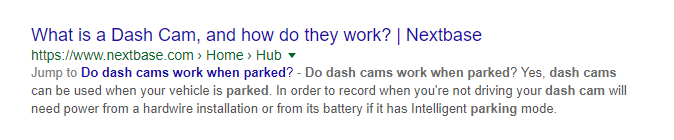
Below is an example of a ‘Jump to’ link that we curated for a client website for the phrase “Do dash cams work when parked”:

2011: Voice Search
Hands busy? No problem; “Okay Google!” Ever since KITT the talking car appeared on our TV screens alongside the Hoff, a select group of people have been trying to make their childhood dreams a reality, and they’re succeeding.


Siri first appeared on iPhones in 2011, prompting people to ask their phones to call them anything but their own names, Alexa launched in 2014 connecting e-commerce to voice and from 2016 Google has been perfecting the art of the virtual assistant. Although we’re still a long way from a fully functioning digital Jeeves, it’s already starting.


Did you know that 79% of industry professionals “agree it will be important to reach audiences through voice activated devices in the next year” while only 24% cite voice interfaces as a “priority for 2018”? That’s a significant disparity between acknowledgment and action.
At ROAST we’re investigating how voice search is developing across 23 industry verticals over the coming quarters. Q2 is out right now and Q3 is currently in the pipeline. Take a look at how your industry fares with our Voice Search Ranking Reports.


2014: Answer Boxes
With search algorithms producing increasingly rich search results, the day of searching via a few choice keywords are over. Since 2014 Google has been working to make the internet as accessible as possible. Now, people have enough confidence in search engines to submit fully formed sentences such as: “what is covfefe?” and “how to make slime” (true questions submitted in 2017).
This has provided an opportunity for SEO to offer a more human solution and also pursue search results in multiple forms. Answer boxes are the new golden search goose, and the launch of voice search has only made these answer types more valuable.


2016: Page Speed Indexing
Sometimes bandied around the SEO playground as the “my website is faster than your website” competition, Page Speed Indexing originally concerned the time it took for a page to fully load which as Alex stated previously is not a success metric. This is because TTI – Time To Interactive is more important from a UX perspective.
Chop chop! It only takes 3 seconds for a user to lose interest in a loading website, so the faster you can get your web page interactive (regardless of being fully loaded), the less likely a user is to click off. To help with any performance issues your website may have, Google developed Lighthouse and released it 2016. We’ve been rigorously auditing our sites à la Lighthouse ever since.
However, it’s no longer just a question of whether your website loads fast enough. Websites need to be agile enough that when an anchor tag is activated, that part of the website is able to start interacting with the user. It keeps interaction agility alive past a basic tick-box.


2018: Viva La Schema
Structured data and rich snippets have also been going since 2009; we’re all familiar with recipe cards or local business information appearing in the knowledge graph. However, some fantastic developments have occurred this year that we should all be on the lookout for – and what do you know! They’ve been presented in a mobile-first format.
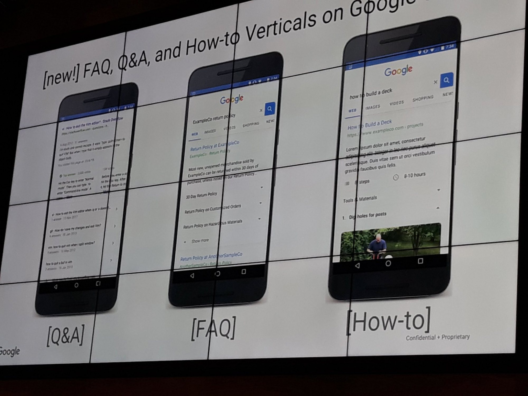
Designed for easy reading and fast consumption, the next generation of schema builds on the previous rewards reaped from answer boxes and comes to you in three forms:

  • Q&A
  • FAQ
  • How-to

TL;DR
Time and efficiency both in build and search results will continue to dominate our industry. Pursuing one e.g. web design) at the expense of the other (content, structure etc.) will give you short-lived successes. Embrace these developments as they come and it will make the next update easier to adapt to. So stop holding out for the ‘Next Big Thing in Search’ because it’s already happening.
79% agree it will be important to reach audiences through voice activated devices in the next year – DAX, March 2018, https://thisisdax.com/wpcontent/uploads/dax-whitepaper_opt.pdf
24% of cite voice interfaces as priority for 2018 – Toolkit 2018: Why voice is branding’s new frontier, WARC, December 2017

Explore our Introduction to CRO.

Seven days going live with Paige Hobart and the SERP Landscape

With so many fantastic events going on in the virtual world, our own The Now & The Next included, it’s an exciting time to get involved and also learn something new. Over the past seven days it has been SERPs which have been in high demand, with Paige Hobart, SEO Team Director at ROAST speaking at three events.

Going virtual with SMX London

SMX London is a fantastic event organised by Search Engine Land, luckily for us all, they decided to take the two-day event virtual for all those obsessed with SEO and SEM.

Paige was joined by Jason Barnard, Digital Marketing Consultant at Kalicube SAS for the session,  ‘The Ins and Outs of Featured Snippets and Knowledge Panels’,  in which both SERP experts took us through their insights on navigating the SERPs.

Paige took us through the SERP Landscape, explaining what SERP Features are, how many there are and how we can measure them and use the data to empower any SEO strategy. She demonstrated the effect of the pandemic on SERPs, including the wide ranging impacts on industries, as well as popular searches emerging, such as the “Quarantini Cocktail”.

Bringing the SEO community together with Turn Digi

Next was Turn Digi. Livestreaming from Barcelona, Turn DIGI is an online marketing event promoting entrepreneurs, rising talent and gender equality. This event was organised by Jo Juliana Turnbull, who has brought together an impressive host of SEO experts across borders.

Again Paige, joined by Faisal Anderson and Luke Carthy, took the audience through the SERP features landscape. ROAST discovered 40 SERP Features, which are compiled in our SERP Features Glossary and with the help of Myposeo are tracked in the Live SERP Feature Report in which ROAST currently track 24 verticals across mobile and desktop.

All sessions are available via their YouTube, and Turn Digi will be returning by popular demand on the 2nd of July!

When GMB and Knowledge Panels Collide with Authoritas

To round off this fantastic seven days of live events, Paige joined Jason Barnard and Andrea Volpini on Tea-Time SEO with Authoritas. These sessions run daily at 4pm and bring together professionals from across the SEO industry to share Online Marketing Tips they can implement straight away!

Paige’s top tips:

  • It’s not just your GMB & Knowledge Panels
  • Be aware of YOUR knowledge graph data
  • There’s stuff you can impact and stuff you can’t
  • Don’t forget to think Mobile

Watch it here:


Interested in learning more about new SEO features and updates to help your business tackle any problems it might be facing due to COVID-19? Check out this guide to the latest changes.

Read more news from ROAST!

Search LDN’s 11th Birthday Party

Recently Search LDN hosted us at their 11th Birthday Party in London, their first in-person event of 2022. Provided with amazing food, drinks, and some pretty great talks, I came away with stacks of insights!

Below I’ve summarised two of the presentations which I found incredibly relevant and useful.

Crystal Carter – Top of the SERP: Rich Results and Featured Snippets in 2022

In this talk Crystal made us think about Featured Snippets in a different way. More than just your classic answer box, Featured Snippets can take up many different shapes and forms – even different placements on the SERP.

How can you optimise for current FS trends?

Top tip: If you want to know what Google is changing on the SERP, look at Bing. Crystal tells us that Bing is extremely transparent with regard to sharing information about its algorithm. Pay attention to what Bing is doing to learn a lot about the MUM update.

How to optimise for MUM Featured Snippets

Crystal says you need to be prepared to share!

  • Google is happy to mix content from multiple sources to complete a snippet.
  • Google treats Featured Snippet Keywords as Topics rather than standalone terms.
  • Protect your traffic:
    • Covering your topic in multimedia with schema
    • Cover the full funnel of your topic
    • Build strategic topic links and partnerships

Key Takeaways

To sum it all up, Crystal’s key takeaway was to look at Featured Snippets as more than just an answer box. They can take up other parts of the SERP, and it’s important to consider all parts of the user journey when trying to win these types of results.

Natalie Mott: Website Migration Disasters and How to Avoid Them

Despite there being a lot of literature about migrations on the web, we still find ourselves in situations where migrations don’t go according to plan.

As an industry, we seem to take post-migration traffic loss as a given. Natalie ran a Twitter poll and found that 78% of people agree! Tweet here.

Google advises us to see ranking fluctuations post-migration. Natalie, however, thinks that we can do better than blindly accepting a loss of traffic.

For every migration fail like this, there are plenty of case studies that show success. However: typically what can go wrong, will go wrong.

What can go wrong:

  1. The project management process is lacking
  2. SEO is not involved early enough
  3. Lack of understanding of risk
  4. SEO or dev understanding deficits (JavaScript, client-side rendering)
  5. Mismatched objectives (dev will want user-friendly content)
  6. SEO recommendations ignored
  7. Sometimes migrations coincide with an algorithm update (you can get everything right but unlucky timing)

We have no way of knowing if Google will favour our new content, but we can manage everything from a human standpoint.

Key Takeaways

Natalie’s key takeaway was to always ally yourself with the team running the migration. You want to be a part of these conversations early so that you can ensure that SEO considerations are taken into account. While there are a lot of things that can go wrong in a migration, all potential technical SEO issues are avoidable with a strong client relationship.
Written by ROAST, SEO Account Manager Christie Tucker. Follow Christie on Twitter here.

Google IO 2023: Embracing the AI Revolution

Google IO, the annual conference hosted by Google, was hosted last week with an exciting line-up of innovations to mark its 15th anniversary. With AI gaining significant traction, the community eagerly anticipated Google’s revelations. And boy, did Google deliver!

Reminding the world that Google has always been an “AI-first” company, Sridhar unveiled a reimagination of its core products, setting the stage for a remarkable year ahead. At the forefront of this transformation is PaLM 2, Google’s latest large language model (LLM). This cutting-edge model will power Google’s revamped Bard chat tool, positioning itself as a competitor to OpenAI’s ChatGPT. Additionally, PaLM 2 was framed as the foundational model for an array of new AI features.

PaLM 2 truly promises to revolutionize daily human interaction with computers, propelling us into the future of artificial intelligence, here is how:

  • Breaking Language Barriers: PaLM 2 facilitates translation between languages, making information more accessible to people worldwide and fostering greater global connectivity. 
  • Accelerating Research: By helping users identify intricate patterns and relationships in data that would otherwise be imperceptible, PaLM 2 significantly expedites the research process. 
  • Empowering Product Development: Engineers can leverage PaLM 2 to design and test software and hardware products more efficiently, catalyzing innovation across industries. 

PaLM 2 (a Large Language Model – LLM) represents a significant leap forward in multilingual language models. It comprehends and generates text in over 100 languages, making it an ideal choice for applications such as machine translation, customer service, and education. It exhibits exceptional proficiency in scientific and mathematical reasoning, derived from extensive training on vast datasets of scientific papers. It codes Python, JavaScript and extends to the more niche languages such as Prolog, Fortran, and Verilog.  

With PaLM 2 on the horizon, the potential for positive change in the world is enormous. Although still under development, LLM’s impact on computer-human interaction is already profound. 

Now, let’s delve into some of the remarkable highlights from Google IO 2023: 

  • Google Maps: Embarking on a new level of innovation, Google Maps introduces “Immersive View for Routes” in select cities. This groundbreaking feature transports users into a digitally recreated model of their precise route, revolutionizing navigation through its highly immersive and interactive experience. Leveraging advanced AI technology, Google Maps enables users to visualize their upcoming journeys like never before. 
  • Google Photos: Elevating the photo editing experience to new heights, Google Photos introduces Magic Editor—an AI-powered feature that grants users the ability to perform intricate edits in specific areas of their photos. From adjusting foregrounds and backgrounds to intelligently filling in missing parts of an image, Magic Editor’s capabilities redefine the art of photography. 
  • Search, now SGE (Search with Generative AI): Google Search embraces generative AI front and centre. Users can now ask entirely new types of questions, leading to AI-powered snapshots that offer quick overviews, essential factors to consider, and synthesized relevant insights and information. 

To provide a visual representation of anticipated SGE changes, here is a very informative visual shared by Brodie Clark: 

GoogleIO

Lots of changes, right? Huge! It’s still early days, plus it’s expected to be highly intent/query dependent but very interesting! Below are some initial call-outs: 

  • Fewer blue links: Google has allocated more non-clickable space on the search results page, resulting in fewer links to external websites. This shift may pose a challenge for websites aiming to gain visibility in search results, given the reduced space available. 
  • Organic positions: Organic search results are now positioned further down the page. Users are now more likely to encounter featured snippets or conversational follow-up prompts at the top, potentially reducing the visibility of organic search results. 
  • Featured snippets decommissioned: Featured snippets are now integrated into the SGE (Search Generation Engine) unit. Consequently, Google creates and displays its own content rather than relying solely on external websites. This change might make it more challenging for websites to rank for specific keywords, as they compete with Google for the top spot in search results. 
  • Conversational follow-up prompts: Google now enables users to engage in conversations with the search engine directly. While this offers convenience, it may make it harder for users to find the information they seek on external websites. 

It will be interesting to see how these changes impact Google Search in the long run. The introduction of SGE is sure to have a mixed impact on the tech industry. Some businesses will benefit from SGE, while others may be negatively affected. To make some predictions, let’s look at who we anticipate this will affect positively and negatively. 

Winners: 

  • E-commerce businesses: SGE empowers e-commerce businesses to provide comprehensive product information, including reviews, specifications, and customer ratings. This enables customers to make more informed purchasing decisions, potentially boosting sales and enhancing customer satisfaction. 
  • Travel businesses: SGE allows travel businesses to offer detailed destination information such as pricing, attractions, and activities. This assists travellers in planning their trips effectively, leading to increased bookings and improved customer satisfaction. 
  • Brands with strong industry authority: Brands recognized for their expertise in specific industry categories can leverage SGE to strengthen their authority and build trust with customers. For instance, a brand renowned for high-quality products can utilize SGE to provide in-depth information about the manufacturing process, materials used, and quality control measures. This instils confidence in customers regarding the product’s quality. 

Losers: 

  • Aggregators: Aggregators may experience decreased traffic as users find the information, they seek directly on the search results page. For example, a news aggregator that compiles news articles from various websites might witness reduced traffic as users access the desired articles directly through Google Search. 
  • Answer sites: Answer sites could face a decline in traffic as users find comprehensive and informative answers directly within the search results. An answer site focused on addressing specific topics might experience reduced traffic as users obtain detailed answers from Google Search itself. 

Summary: 

It is still too early to say how SGE will ultimately impact the industry. However, it is clear that SGE has the potential to revolutionize the way we use Google Search.

Read more news from ROAST!

TikTok for SEO Success: Finding an SEO strategy that works for you

Our Senior Organic Performance Manager, Aimee Metcalf, spoke on the recent Go! Network webinar on ‘Social as an Engine – Finding a Strategy that Works for You’, watch the full video here.

Below is a breakdown of her thoughts on this subject.

Table of contents

  • What exactly is TikTok SEO?
  • Why do we need to care about TikTok SEO?
  • Is TikTok threatening Google’s dominance for search?
  • How TikTok SEO is different from traditional SEO.
  • Step 1 | How to optimise for TikTok’s “For You” Page. 
  • Step 2 | Understanding TikTok Ranking Factors. 
  • How to incorporate TikTok in your Google Search strategy.
  • How can we optimise TikTok videos for Google Search?
  • How do we measure TikTok success on Google Search?
  • Key Takeaways. 

What exactly is TikTok SEO?

TikTok SEO is the practice of optimising your video content for TikTok’s search engine, specifically for TikTok’s “For You Page” and search results pages. Just as we would traditionally use keywords and analytics to optimise website content for higher search engine rankings, we can now use specific tactics (exact tactics explored later in this piece) to help TikTok videos show up in more search results, this includes appearing in results both on the TikTok platform as well as Google search.

Why we need to care about TikTok SEO 

TikTok is no longer a platform just for short-form entertainment but should now also be considered a search engine, particularly among the Gen Z audience (those born from 1997 to 2011). We know that Gen Z are increasingly engaging in TikTok, for example:

Among Gen Z outside China and India, use of  TikTok has grown by 43% since Q4 2020

GWI Gen Z Webinar | February 2024

Instagram is Gen Z’s favourite platform, but they believe TikTok has the biggest cultural influence

GWI Gen Z Webinar | February 2024

But how exactly are Gen Z engaging in TikTok? Gen Z are increasingly using TikTok as their preferred social engine,  with TikTok overtaking Google as the most popular search engine among Gen Z according to Adobe 2024 report

Adobe Jan 2024 Survey also found that nearly 1 in 10 Gen Zs are more likely to rely on TikTok as a search engine than Google. TikTok: The New GoogleThe same Adobe Jan 2024 Survey also found that Over 2 in 5 Americans now use TikTok as a search engine. With the above insights in mind, brands can no longer ignore the power of TikTok for search,  particularly for those targeting younger generations like Gen Z, or brands who have an American target audience.

Is TikTok threatening Google’s dominance for search?  

Core Google services, including search and maps, are being heavily impacted by a growing preference for TikTok and multi-format content like video as the first stop on Gen Z’s’ path to discovery. 

Google’s senior vice president Prabhakar Raghavan, in a discussion on the evolution of search, even noted users are now turning to apps like Instagram and TikTok instead of Google for discovery purposes. Users are increasingly moving away from typing in keywords into Google search but rather looking to discover content in new, more immersive ways. 

“In our studies, something like almost 40% of young people, when they’re looking for a place for lunch, they don’t go to Google Maps or Search,” he continued. “They go to TikTok or Instagram.” 

Prabhakar Raghavan, Google’s senior vice president

User’s are researching queries they would traditionally search for on Google but staying on the TikTok app much longer than they would on Google due to the entertainment factor and tailored algorithm.. Highlighting the opportunity for brands to fit seamlessly into the videos their target audience are already engaging with, through platforms like TikTok.

TikTok SEO is different from traditional SEO

SEO strategies for Google and TikTok share some similarities but also have notable differences. Both emphasise the importance of creating informative and helpful content tailored to the target audience’s search intent. Yet, there is one significant difference between traditional SEO and TikTok SEO: previous brand success and brand authority do not heavily influence TikTok rankings unlike Google, where brand authority plays a significant role. 

  • TikTok = visual

TikTok SEO involves optimising video content, while traditional SEO involves optimising text-based content. 

  • TikTok = hashtags

On TikTok, using popular and relevant hashtags are a great way to help users find and discover new content, more so than optimising for relevant keywords like traditional SEO.

  • TikTok = engagement

On TikTok, success is often measured by the level of engagement a video receives, such as the number of likes, comments, and shares while traditional SEO is predominantly focused on rankings. 

  • TikTok = non-authoritative

For Google search, sites that want to rank top of page 1 need to earn this by showing Google that the site is an authority on the topic.  However, TikTok does not factor authority measures (like follower & like count) into its SEO ranking algorithm. Step 1 | How to optimise for TikTok’s “For You” Page? 

Like traditional website SEO, identifying new TikTok video opportunities starts with thorough keyword research. Tools which can be used here include:

  • TikTok’s predictive search feature
  • TikTok’s keyword insights tool
  • TikTok’s creative insights centre – this is not only useful for keyword research but also favourable for identifying popular hashtags, songs, creators and videos most popular at a given time
  • Traditional SEO keyword research tools like Keyword Planner & Ahrefs
  • NEW! AnswerThePublic have recently released a TikTok search feature 

Step 2 | Understanding TikTok Ranking Factors 

  • Engagement

User interactions include the videos liked, videos hidden, videos added to favourites, and videos watched all the way to the end. TikTok stores all of this data and uses it to determine which videos to surface to the user. 

  • Video Information 

All information contained in a video can affect its ranking on TikTok – including hashtags, keywords, sound effects, and music. TikTok looks for videos that contain relevant keywords in their titles and descriptions, as well as videos that cover trending topics.

  • Relevancy 

Using popular sounds, filters, and ideas can help TikTok videos gain a spot on the “For You Page” faster. TikTok highlights to creators what’s trending in order to boost the chances of gaining a video on the “For You Page”. It’s Important to bear in mind that TikTok videos can stay relevant for a long period of time and even rank for years, so it’s worth creating a TikTok strategy which includes producing trending content alongside a strong catalogue of evergreen content.

  • Thumbnails 

Thumbnail optimisation on TikTok is vital – a compelling thumbnail increases CTR. Additionally, creating a visually engaging thumbnail which includes relevant text overlaying the thumbnail image is key.

  • Audience 

User interactions like comments and likes are confirmed contributing factors for having a TikTok video land on the “For You Page”. 

Although not a direct ranking factor, brands should consider collaborating with other TikToker’s or TikTok influencers within their TikTok SEO strategy. Collaborating is a great way to build more visibility by getting discovered on another part of the TikTok platform (the “Following” page).

How do we measure TikTok SEO success?

KPI 1  | TikTok search bar → to determine keyword ranking

KPI 2 | Viewers tab → analysing the audience insights to ensure the right target users are being reached 

KPI 3 | Performance tabhere you’ll find user interaction data, including metrics such as new followers, average watch time, likes, shares, and retention rate

How to incorporate TikTok in your Google Search strategy

Google also indexes TikTok videos on the main SERP highlighting that brands incorporating TikTok into their wider search strategy has value not only for TikTok platform-specific searches but also Google searches. 

Speculations as to why Google is increasingly surfacing TikTok content on Google search rather than increasing the amount of YouTube content being shown includes: 

  1. Google over the last few years has increasingly favoured site’s which incorporate short form, bite-size video content due to video content being a great way for sites to build on E.E.A.T signals and helpful content signals. Initially, the May 2022 core Google algorithm update increased the visibility and importance of site’s having video content and more recently through the April 2024 core Google algorithm update where helpful content is now built into Google’s ranking algorithm.
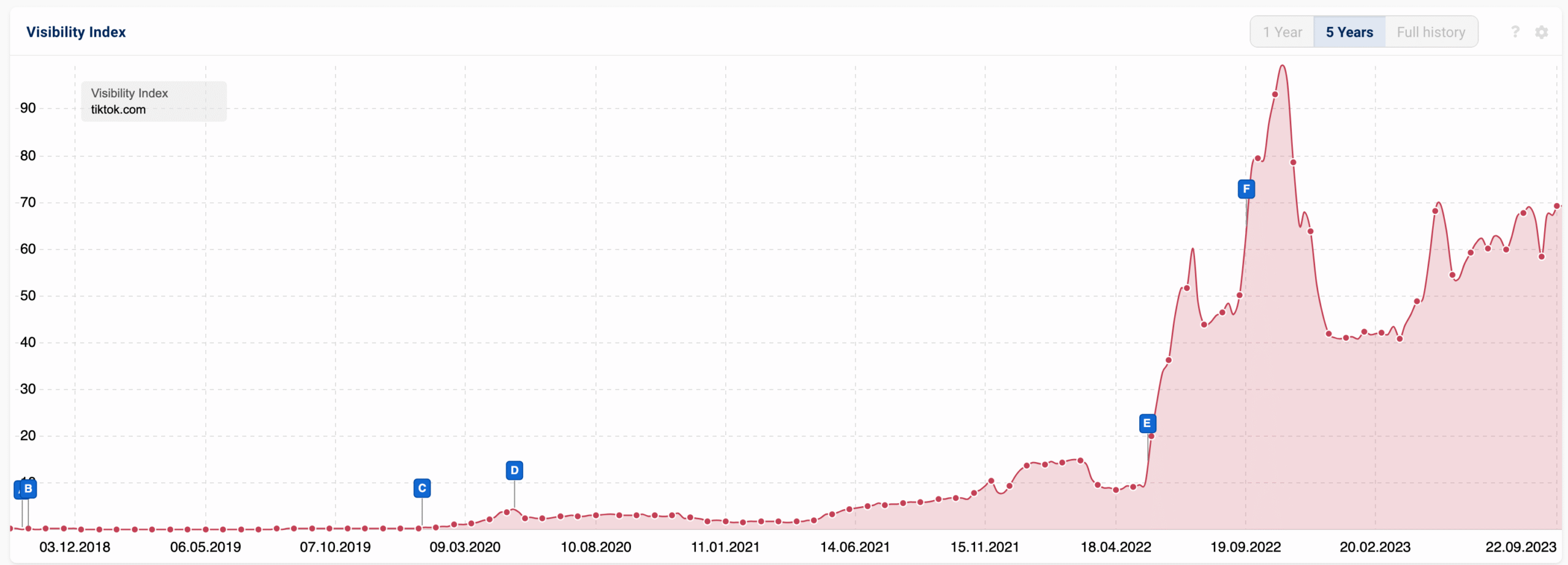
  2. With SGE rolling out in the US and soon to be rolled out in the UK,  we know there has been a clear emphasis placed on user-generated content by Google. Google has put increasing value on surfacing user-generated platforms like TikTok, Reddit and LinkedIn, with rankings of these platforms having more than doubled towards the end of 2023 in the US.

TikTok’s visibility on Google US SERP according to Sistrix dataTikTok’s visibility on Google US SERP according to Sistrix data. Source Here Ultimately, the introduction of TikTok in Google SERPs is likely to be Google’s way of avoiding the potential loss of market share but also adhering to Google’s ranking algorithm. Ranking short-form videos like those on TikTok, aligns to Google favouring sites which produce helpful content (E.E.A.T) created for users rather than search engines. 

How can we optimise TikTok videos for Google Search?

Step 1 | Analysis of the Google SERP to identify the categories where TikTok/ short-form video content is favoured 

Step 2 | Highlight if the suggested TikTok video content is a page embed opportunity or just a TikTok platform opportunity 

How do we measure TikTok success on Google Search?

KPI 1 | Traffic driven to the TikTok profile and website pages where TikTok videos are embedded into the page copy

KPI 2 |  Keyword rankings for the target pages with TikTok videos embedded 

Key Takeaways 

No matter a brand’s industry, TikTok is all about creating high-quality content that’s relevant and helpful for the user. Undoubtedly, TikTok is already playing a major role in search and shows no signs of slowing down. It is therefore increasingly important for brands, particularly those with a Gen Z target audience or those looking to capture their target audience at the discovery phase of their purchasing journey, that TikTok SEO is incorporated into a brand’s overall search strategy – otherwise, your competition most likely will.

To find out more on how ROAST can support with your organic strategy, or more specifically during the discovery stage through platforms like TikTok, get in touch here.

How AI Will Change The Future of Search​​

John Campbell, ROAST Head of Innovation, and Aimee Metcalf, Senior Organic Performance Manager at Digital Marketing World Forum delve into ‘How AI Will Change the Future of Search’.

  • Overview of the contributions of tech giants in advancing AI-powered search technologies.
  • Innovations from Google, OpenAI, TikTok and Meta in search.
  • Case studies of new AI-driven search features.
  • What you need to be doing to evolve
  • Future trends and what to expect from these companies.

Google Launches AI Mode: A Game-Changer for Search

In a move that’s set to revolutionise how we interact with the world’s most popular search engine, Google has unveiled its new AI Mode. This new “AI-generated result” comes after Google’s successful launch of AI Overviews. The impact of AI Overviews has had one of the biggest impacts on organic search in recent years. With that, many predict even more disruption with AI Mode.

Source: blog.google

What is AI Mode?

AI Mode is Google’s latest innovation, designed to provide users with a more advanced, AI-driven search experience. It builds upon the success of AI Overviews, which has already seen a 10% increase in usage for certain query types in major markets, like the US and India.
This new feature promises:

  • More advanced reasoning capabilities
  • Improved multimodal search functionality
  • The ability to dive deeper into topics through follow-up questions
  • Faster AI responses than any other platform in the industry

How AI Mode Works

At its core, AI Mode utilises a technique called “query fan-out”. This approach breaks down complex questions into subtopics, simultaneously issuing multiple queries. The result? A deeper, more comprehensive exploration of the web that uncovers hyper-relevant content tailored to your specific query.

Users can access the AI mode in a number of ways.

  • A button on the home page of Google
  • A tab at the top of a search result
  • A button at the bottom of an expanded AI overview

Source: blog.google

When AI mode is enabled, all other search results disappear from the results. On the right, the sources used to generate the answers are linked. Users can also access old “conversations” with AI mode on the left, a UI which is very similar to that seen on ChatGPT.

For our clients using ROAST’s SEO and Paid Search services, this development could significantly impact how we optimise campaigns and target keywords. We’ll be closely monitoring how AI Mode affects search behaviour and adjusting our strategies accordingly. For now, AI mode is rolling out to all users in the US after it was an opt-in Google Search Labs experiment.

What’s Next for AI Mode?

Google has also previewed several exciting features set to roll out in the coming months to AI Mode:

  • Deep Search: An enhanced research tool that can create expert-level, fully cited reports in minutes.
  • Search Live: Real-time visual search capabilities powered by Project Astra.
  • Agentic capabilities: AI-assisted task completion, starting with event tickets and restaurant reservations.
  • AI shopping partner: Advanced product browsing and virtual try-on features.
  • Personalised results: Tailored suggestions based on past searches and connected Google apps.

These advancements could reshape how consumers interact with brands online, potentially influencing everything from SEO strategies to content marketing approaches. A number of these are features we’ve seen in the past from previous Google IO events, but it now seems that AI mode could be the home for consumers to access tools such as real search from Project Astra.

Implications for ROAST Clients

As these AI-driven features become more prominent, businesses must adapt their digital strategies. At ROAST, we’re already considering how to leverage these changes to benefit our clients:

  • Tracking results on AI Mode
  • Impact on organic traffic levels
  • Optimising content for AI-driven queries
  • Adapting paid search strategies to align with new search behaviours
  • Exploring opportunities in visual and voice search
  • Enhancing e-commerce experiences to compete with AI shopping features

Our team at ROAST are committed to staying ahead of these technological shifts. We’re excited to help our clients navigate this new AI-enhanced search landscape and capitalise on the opportunities it presents.

As Google continues to push the boundaries of search technology, we’ll be here to guide you through the changes and ensure your digital strategies remain cutting-edge. Stay tuned for more updates and insights as we delve deeper into the implications of AI Mode and other emerging technologies.

If you would like to find out more information on AI Mode, get in touch with our ROAST team.

Interested in more Google news? Discover our article on Google keeping third-party cookies and what it means for advertisers.

The Top 10 SEO Agencies in the UK

Search Engine Optimisation is a core foundation for any successful digital business. The top SEO agencies (UK) go beyond keyword rankings, combining deep technical expertise with strategic insight, leveraging both proprietary and industry tools to deliver data-driven performance. Modern SEO focuses on how search engines understand brands as entities, not just content with top agencies aligning technical efforts with broader marketing objectives for maximum impact. Services often include on-page optimisation, infrastructure support and technical off-page SEO.

In this list, we highlight 10 of the best SEO agencies in London, UK pushing the boundaries of modern SEO.

1. ROAST

Website: https://weareroast.com/

Overview

“We Are Roast” is a multi-award-winning digital performance media agency based in London, UK offering best-in-class SEO, GEO/AI Search, Paid Search, OOH, ATL, Analytics, CX and CRM.

Their goal is simple, to increase the return on your advertising spend (ROAS).

ROAST do this by simplifying the problem and moving forward with the right performance marketing tactics targeting the correct audience, at the right time. ROAST extract solutions from data science along with experimentation and apply it where it will be most valuable. By using digital data at scale, combined with the very best industry tools and tech, ROAST can build highly successful Performance Marketing campaigns for you, as well as new ways you can use that data.

Being independent allows ROAST to be flexible with their clients. Digital Marketing moves quickly, and ROAST can change their strategy and tactics just as quickly. ROAST make sure they build you the correct team, formed around your business. This team will be selected as the right team to drive success for YOUR business. ROAST never build their teams around certain departments, they make them client centric. This way your challenge and goal are always the focus.

Word of mouth and strong client relationships have been the driving force of the agency growth from day one. With trust laying heavily at the heart of all partnerships and are fortunate enough to see their clients return to and refer them, time and again. ROAST always strive to build meaningful and genuine connections.

ROAST is a part of ROAST Group, an award-winning network of specialist digital agencies.

Clients: Experian, Rightmove, LEON, YellowZebra

SEO Strengths: SEO, PPC, Display, Data & Analytics, Programmatic Buying, Mobile, Social, Insights, CRM, Customer Experience, Amazon Marketing, and Content Marketing, GEO/AI Search

Awards & Recognition:

  • UK’s Best Small Companies to Work For 2014 – 2024

Reviews: 4.8 on Google

B-Corp Certified: Yes

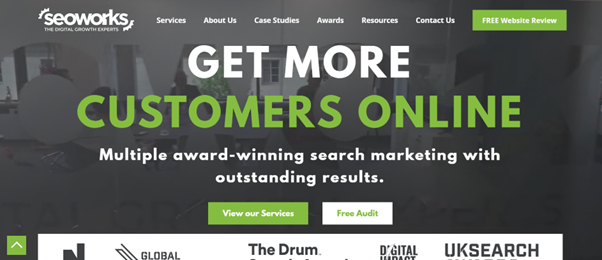
2. The SEO Works

Website: https://www.seoworks.co.uk/

Overview

The SEO Works is a UK-based search marketing agency specialising in SEO, PPC and Web services. The SEO Works was founded in 2009 and have worked for more than a decade with one key goal in mind – to get businesses more customers online. They have won numerous industry awards and a certified Google Premier Partner and Bing Accredited.

Clients: The University of Manchester, Zoho, Decalthon

SEO Strengths: Organic, Technical, Local and AI SEO

Awards & Recognition:

  • Global Agency Awards 2024
  • UK Digital Growth Awards Winner

Reviews: 4.5 (Google)

B-Corp Certified: No

3. Propeller

Website: https://www.propeller.co.uk

Overview

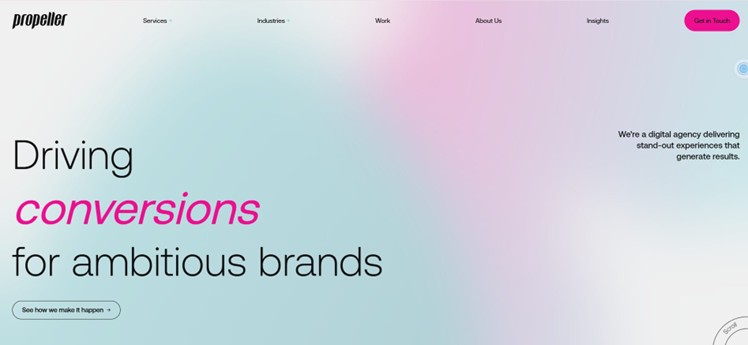
Propeller is a digital agency with expertise in hospitality, food & drink, lifestyle and retail. Their SEO solutions are tailored for brands where storytelling and visibility are everything.

From technical site structure and rich content strategies to local SEO and schema markup, Propeller delivers comprehensive, analytics-driven campaigns that focus on real results, not just rankings.

Clients: Kellogg’s, Young’s, Sushi Samba

SEO Strengths: Local SEO, content strategy, technical SEO

Awards & Recognition:

  • Shortlisted for Best Agency to Work For
  • Nominated for 2 UK Digital Excellence Awards

Reviews: 4.9 (Google)

B-Corp Certified: No

4. The Good Marketer

Website: https://thegoodmarketer.co.uk

Overview

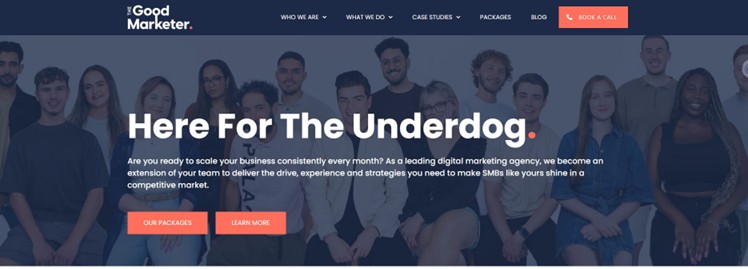
The Good Marketer is a digital marketing agency dedicated to helping small and medium-sized businesses (SMBs) achieve their digital marketing goals and thrive online. Acting as an extension of their clients’ teams, they bring hands-on expertise across a wide range of digital channels, delivering tailored strategies that drive measurable results.

Clients: Relco London, Bling, Halo Hydration, Pan-n-Ice

SEO Strengths: E-commerce SEO, Digital PR

Awards & Recognition:

  • Best Rated Facebook Marketing Agencies 2023
  • UK Social Media Awards 2021 Finalist

Reviews: 4.8 (Google)

B-Corp Certified: No

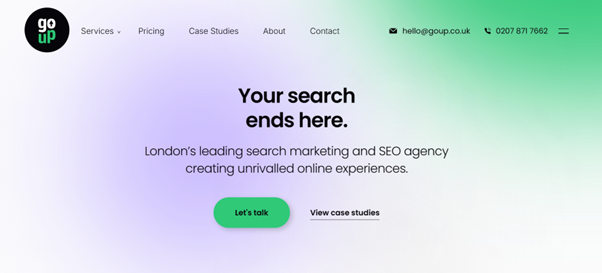
5. GoUP

Website: https://www.goup.co.uk/

Overview

GoUP is a London-based Search Engine Marketing, PR and SEO Agency. Go Up’s services are trusted by world renowned brands, international governments, startups and SMEs.

 Clients: John Lewis, Hackett, Arsenal

SEO Strengths: SEO Strategy, Technical Audits, Content Marketing

Awards & Recognition:

  • Shortlisted at We Are Search UK Awards

Reviews: 4.5 (Google)

B-Corp Certified: No

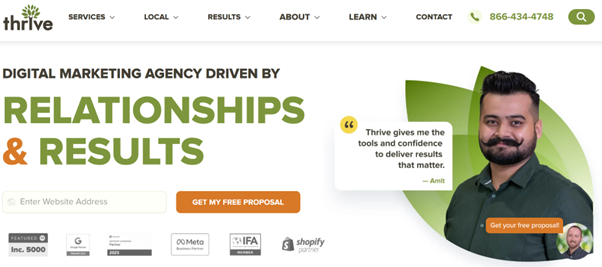
6. Thrive

Website: https://thriveagency.com/

Overview

Thrive Internet Marketing Agency has been an industry-leading digital marketing service provider since 2005, delivering results-driven strategies. Thrive has helped thousands of businesses grow by leveraging our strategy-first approach and proprietary technology and tools.

Thrive works with clients of all sizes, from startups to multi-location enterprises with clients in just about every industry in the U.S., Canada, UK and other countries.

Clients: Brazos Higher Education, Whistleblower Law Firm, Holyland Marketplace

SEO Strengths: Local SEO, Technical SEO, AI SEO

Awards & Recognition:

  • Ranked among the world’s top SEO companies by Clutch

Reviews: 2.9 (Trustpilot)

B-Corp Certified: No

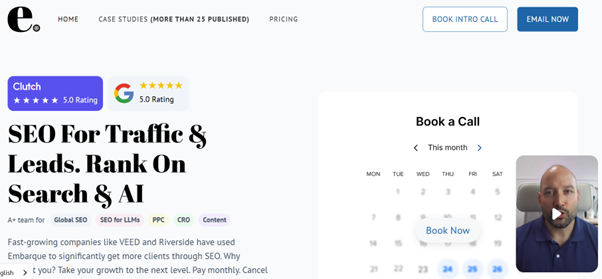
7. Embarque

Website: https://www.embarque.io/case-studies

Overview

UK-based SEO agency. Embarque helps companies grow traffic and customers through data-led, revenue-driven SEO content. They specialise in revenue-drive SEO, turning organic search traffic into leads, signups, demos, not just traffic for its own sake.

Clients: Picflow, MentorCruise, BlueTally

SEO Strengths: Global SEO, SEO for LLMs, PPC

Awards & Recognition:

  • Best SaaS SEO Agency 2024
  • Best SaaS Content Writing Firm 2024

Reviews: 4.9 (Google)

B-Corp Certified:  No

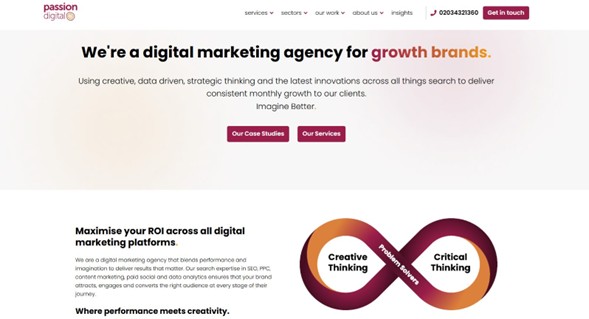
8. Passion Digital

Website: https://passion.digital/

Overview

Passion Digital are a digital marketing agency for growth brands. They use creative, data driven, strategic thinking and the latest innovations across all things search to deliver consistent monthly growth to their clients.

Clients: Quintain Living, Octopus Investments, Knight Frank

SEO Strengths: B2B SEO, Digital Strategy, GEO

Awards & Recognition:

  • UK Digital Growth Awards Winner 2024
  • UK Search Awards Winner 2023

Reviews: 4.8 (Google)

B-Corp Certified: No

9. SQ Digital

Website: https://www.sqdigital.co.uk/

Overview

SQ is a digital marketing consultancy and a trusted partner to growing businesses.

For over 25 years, SQ Digital has helped leading companies bring clarity to digital, reach their customers, enhance their online presence and achieve sustainable growth. As a fellow growing business, SQ Digital know what it takes to grow in a competitive market and are proud to shape our services around the needs of businesses like yours.

Their specialist SQ SEO team works collaboratively with you to create strategies that help improve your website’s visibility on search engines, such as Google and Bing. By increasing your organic visibility, SQ Digital drive more of the right people to your website and make your paid media campaigns work even harder, giving you better results overall and a better return on your investment.

Clients: Forge Europa, Mazuma Mobile, Standfast & Barracks

SEO Strengths: Data-driven approach

Awards & Recognition:

  • Winners of three RAR Digital Awards – based on client feedback
  • Ranked in Prolific North’s annual digital agency league table

Reviews: 4.6 (Google)

B-Corp Certified: No

10. Soap Media

Website: https://www.soapmedia.co.uk/

Overview

Soap Media are an award-winning strategic and creative digital marketing agency based in Manchester and Preston with a high-performance track record for some of the UK’s leading brands.

Soap Media redefine digital and put businesses on the path to success – and are ‘ducking’ good at what we do. Become a dominating force in your industry with the help of the team.

Clients: Booths, Hollywood Bowl, Terra Nova

SEO Strengths: Local SEO, Technical SEO, E-commerce SEO

Awards & Recognition:

  • Prolific North Marketing Finalist
  • Three-time TechBehemoths Winner

Reviews: 4.2 (Google)

B-Corp Certified: No

How are people using AI for work?

OpenAI recently published a study using first-party data, showcasing AI adoption and usage of ChatGPT. Here we’ve broken down the TLDR, as well as our own thoughts on what this could mean for changes in the search behaviour of key decision makers.

Quick summary

  • LLM usage is growing among workers particularly in the Information Technology industries
  • One of the main uses of ChatGPT in the workplace is research
  • With the rise of Agent Mode, appearing in AI results is paramount to Organic Search strategies
  • Check out our AI crawlability checklist at the end

Are people using ChatGPT for work?

According to the OpenAI study, over a quarter of workers in the US are using ChatGPT for work. While this is an American study, we can safely assume that employees in the UK are fast following suit. This comes as no surprise when thinking about how the tool can be used for research, to brainstorm ideas and to summarise data among many other efficiencies.

Who is using ChatGPT in the workplace?

According to OpenAi’s recent study, increasing numbers of the public are using ChatGPT as gender gaps decrease and accessibility improves. The tool is now accessible globally, and has seen that adoption growth rates in low-income countries were far greater than that of the countries with the highest incomes.

OpenAI also claims that there is a correlation between ChatGPT usage and education, where almost half of workers with graduate degrees use the tool for work.

Which industries are adopting ChatGPT?

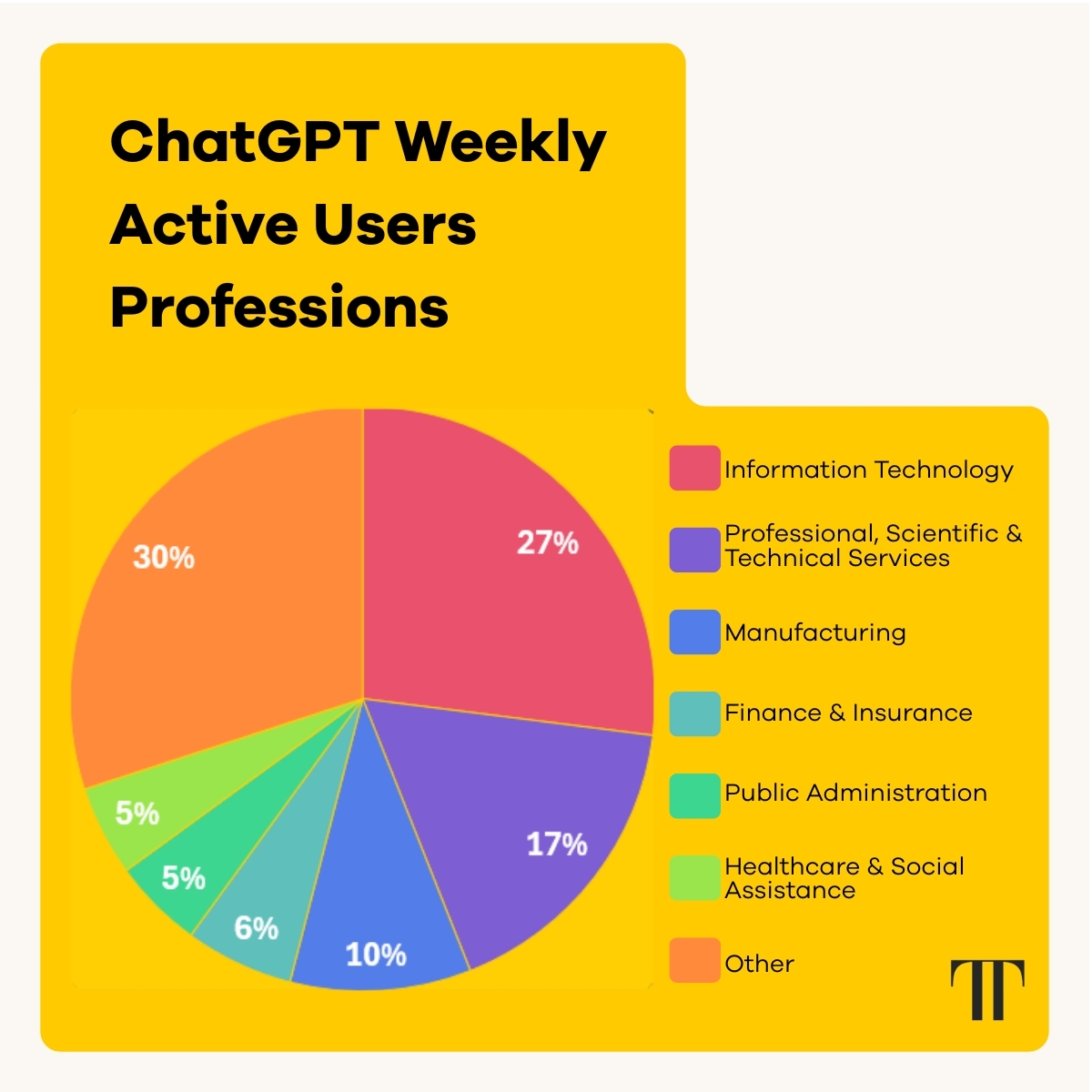
OpenAI’s research shows that the industry that uses ChatGPT the most is IT, making up 27% of weekly active tool users, followed by Professional, scientific and technical services (which includes accounting and legal services) at 17%. Manufacturing comes in at third with 10% share of business weekly active users. 6% of ChatGPT weekly active users work in Finance & Insurance.

Workers in IT and Finance use the tool for information-heavy work whereas manufacturers use it for things like process automation and supply chain optimisation.

OpenAI were able to ascertain this information by mapping user email domains to industries, where work email addresses are used.

How are people using ChatGPT for work?

Unsurprisingly, people working in IT and Finance are showing the highest levels of AI adoption given their propensity to use tech. In these industries, research is within the top 3 technical uses of the tool.With this we can infer that there is a high likelihood that key decision-makers are also using AI for their own research, which means brands targeting these audiences need to be visible within AI search results.

OpenAI claims that go-to-market teams use ChatGPT for writingresearch and media generation.

A pie chart showing the top professions of top ChatGPT Weekly Active Users and the percentages.
 

How will decision-makers’ use of AI evolve?

In the near future, we expect that workers and key decision makers will use Agent Mode for complex research and planning tasks. Agent Mode is where an AI bot crawls content on the web to retrieve information and produce in-depth research, including all sources.

For both B2C and B2B brands, it will become crucial to be visible in these types of AI searches to be considered by desired audiences. Generative Engine Optimisation needs to be a part of their Organic Strategies in order to compete in the rapidly evolving search landscape.

How to ensure your brand appears in LLM search

With LLM search being a relatively new addition to the search journey, the best place to start is through measurement. Understanding where your website performs and which competitors are winning in the space will help to guide your strategy.

Having a comprehensive Organic Search strategy should encompass both traditional Search Engine Optimisation as well as AI search (or GEO).

That being said, here is a quick list of technical checks you can do to ensure your website is able to be crawled by AI bots.

✅ AI crawlability checklist:

  • Ensure AI bots are not blocked from crawling your site – in robots.txt or at a server level
  • Put all important content in the HTML of the page (not in JS or PDFs)
  • Utilise internal linking to ensure your content is discoverable and to add context