
The digital marketing landscape is shifting beneath our feet and if you’re still optimising purely for traditional search engines, you might be missing half the picture.
GEO vs SEO refers to two approaches to search optimisation: SEO focuses on ranking in traditional search engines, while GEO focuses on content to be cited in AI-generated answers like ChatGPT and Google AI Overviews.
Here are the key differences: SEO targets traditional search engine results pages (those blue links we’ve all clicked for decades), whilst GEO focuses on optimising for AI-generated answers that appear directly in search interfaces.
What is SEO?
Search Engine Optimisation (SEO) is the practice of improving your website’s visibility in organic search results on platforms like Google, Bing and other search engines. It’s a discipline that’s evolved significantly since the early 2000s, but the core principle remains: make your content discoverable and relevant to what people are searching for.
SEO encompasses several key areas such as keyword research and implementation, content quality and relevance, technical optimisation (site speed, mobile responsiveness, crawlability), backlink building for authority, and user experience signals. The goal has always been to rank higher in those search engine results pages, driving traffic to your website where users can engage with your content, products, or services.
Traditional SEO is still vital, but it’s no longer the only game in town.
What is GEO?
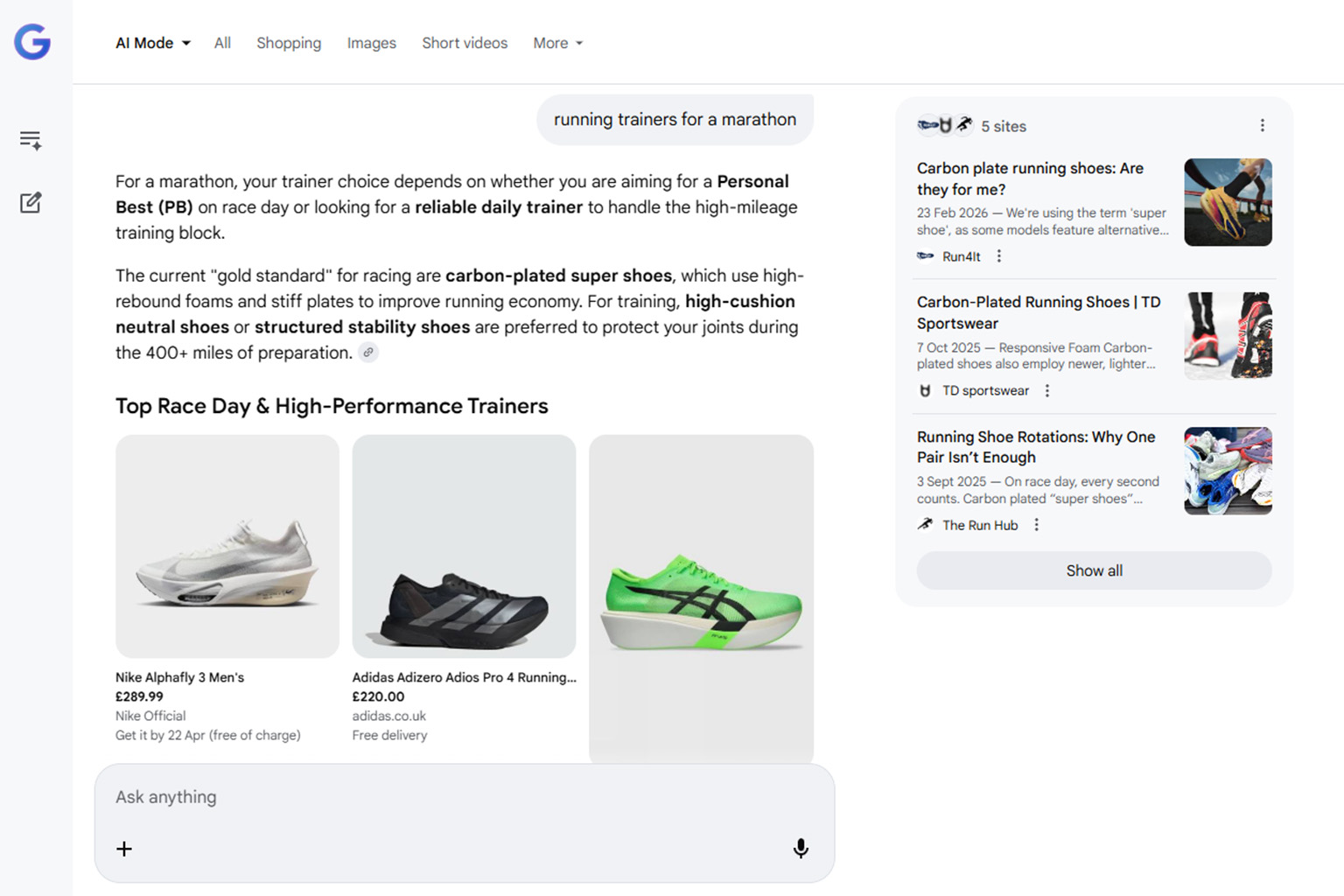
Generative Engine Optimisation (GEO) is a newer approach designed specifically for AI-generated search experiences like ChatGPT, Google’s AI Overviews, Microsoft Copilot and Perplexity. When users ask a question inside an LLM, they receive synthesised answers pulled from multiple sources, rather than a list of links to click through. GEO focuses on making your content the source that AI models cite and reference when generating these answers.
The core elements differ from traditional SEO: clarity and directness in how information is presented, structured data and clear formatting that AI can easily parse, authoritative and factual content that AI models trust and concise answers to specific questions that might be used in AI responses.
SEO vs GEO: A Direct Comparison
| Aspect | SEO | GEO |
| Primary Goal | Rank highly in search results to drive clicks | Be cited by AI in generated responses |
| User Journey | User clicks through to your website | User gets answer directly, may not visit site |
| Content Style | Comprehensive, keyword-optimised | Clear, structured, quotable |
| Success Metric | Rankings, traffic, conversions | Citations, brand visibility in AI answers |
| Optimisation Focus | Keywords, backlinks, technical factors | Clarity, authority, structured data |
Is GEO Replacing SEO?
Short answer: no, but search behaviour is evolving.
Traditional search isn’t disappearing overnight. Google still processes billions of searches daily and many users still prefer clicking through to websites for detailed information, particularly for complex research, purchasing decisions, or when they want multiple perspectives. However, user behaviour is evolving. Younger demographics are increasingly starting their searches with AI tools and even traditional search engines are integrating AI-generated answers at the top of results pages.
If you’re only optimising for SEO, you risk missing visibility in AI-generated answers where decisions increasingly begin. The reality is more nuanced than replacement, it’s expansion.
What is the difference between SEO and GEO?
Fundamentally, it’s about where and how your content appears, not whether it should appear at all. SEO is designed for ranking. GEO is designed for retrieval and citation.
How GEO and SEO Work Together
The most effective digital strategy doesn’t choose one over the other, it integrates both.
How SEO supports GEO
GEO-optimised content often improves traditional SEO. Clear, well-structured content with definitive answers tends to perform well for featured snippets and “People Also Ask” boxes.
How GEO enhances SEO
Meanwhile, GEO-optimised content often improves your traditional SEO. Clear, well-structured content with definitive answers tends to perform well for featured snippets and “People Also Ask” boxes in Google, which are precursors to AI-generated answers.
How to Optimise for GEO (AI Search)
To improve your visibility in AI-generated answers, your content needs to be easy to extract, understand and trust.
- Answer questions directly and early in each section
- Use clear structure (H2s, H3s, bullet points)
- Write in short, explicit sentences that are easy to quote
- Clearly name entities (brands, tools, people) instead of using vague references
- Build authority through credible sources, backlinks and consistent messaging
Unlike traditional SEO, where keywords dominate, GEO rewards clarity and context.
How AI Decides What to Cite (Entity Recognition Explained)
One of the biggest differences in GEO vs SEO is how AI systems evaluate and attribute information.
Search engines rely heavily on backlinks and engagement signals. AI systems, however, focus more on entity recognition, understanding who or what is being referenced, and how consistently it appears across sources.
For example, writing “Nike is a global sportswear brand” is clearer for AI than saying “this sportswear brand.”
The more explicit and consistent your references are, the easier it is for AI to:
- Attribute information correctly
- Trust your content
- Include your brand in generated answers
This is why GEO extends beyond your website, mentions across articles, reviews, and third-party sites all shape how AI understands your brand.
How Keyword Strategy Changes in the GEO Era
Traditional SEO targets keywords with clear search volume.
GEO focuses more on conversational queries and intent clusters.
Users don’t type “GEO SEO difference” into AI tools, they ask:
- “What is GEO in marketing?”
- “Is SEO still relevant with AI?”
- “How do I optimise for ChatGPT?”
This shift means your content should answer real questions, not just target keywords.
Frequently Asked Questions


What is GEO in marketing?
GEO (Generative Engine Optimisation) is the practice of optimising content to be surfaced and cited in AI-generated search results.
Is GEO replacing SEO?
No. GEO complements SEO rather than replacing it, as both serve different types of search behaviour.
How do you optimise for AI search?
By structuring content clearly, answering questions directly, and building authority so AI systems trust and cite your content.
Which platforms use GEO?
AI-driven platforms such as ChatGPT, Google AI Overviews, Perplexity and Microsoft Copilot rely on GEO principles.
Why you need both SEO and GEO
At ROAST, we’re helping brands navigate this transition by auditing content for both SEO and GEO readiness.
The brands that win will be those that optimise for how people search, whether that’s typing into Google or asking ChatGPT.
Stop thinking about SEO and GEO as competing strategies. They’re two sides of the same coin, both working to ensure your content reaches your audience wherever they’re looking for answers.