
ROAST’s insights and strategy director Jamie Ross-Skinner explains why high-attention media and context are now the most critical drivers of campaign impact.
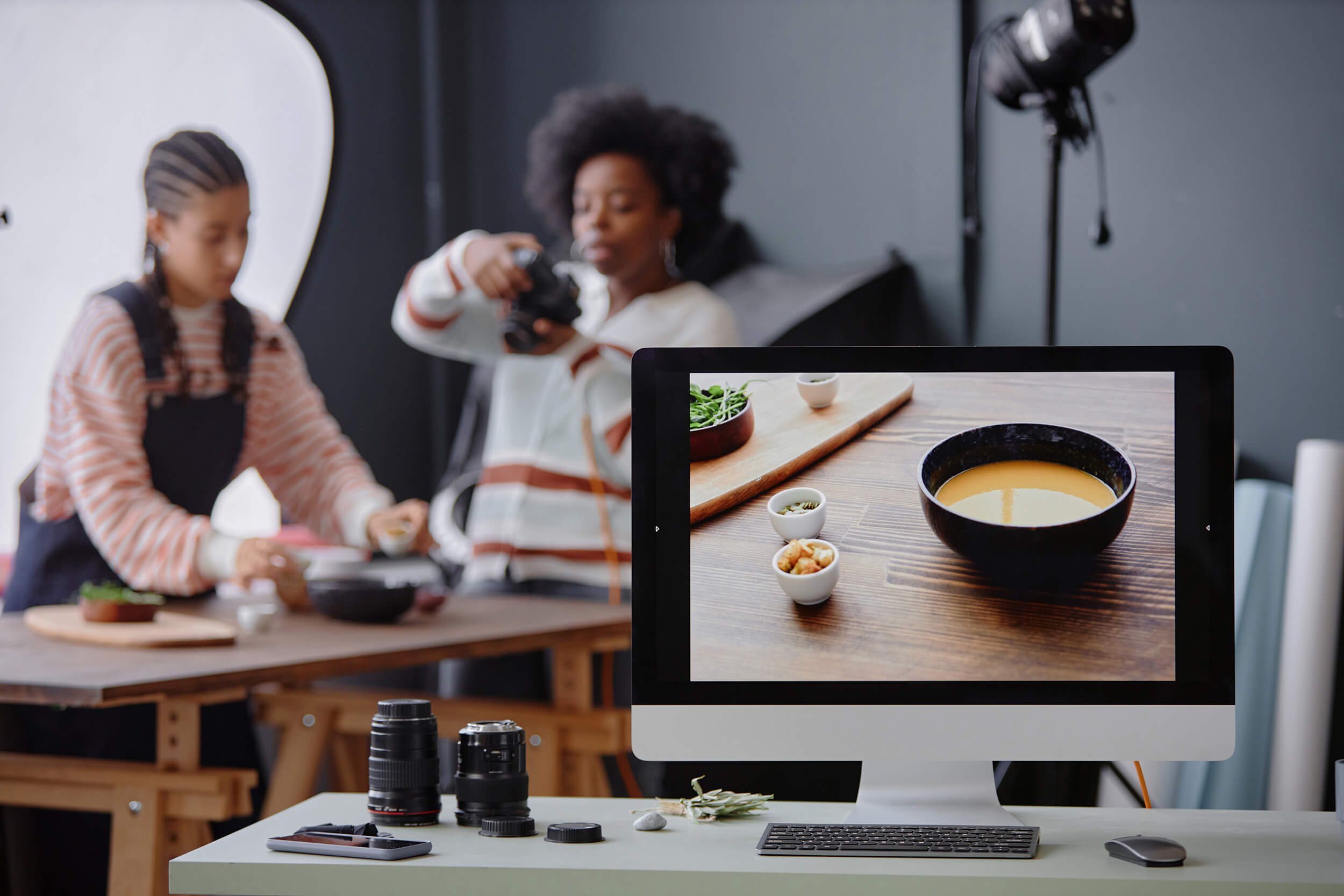
There’s a simple image that captures the state of our industry right now. Imagine being served a Michelin-starred meal… at the worst table in the restaurant. Great creative, delivered through poor media, is exactly that. A masterpiece placed in the wrong light. A jewel showcased in a bargain-bin cabinet.
For years we’ve repeated McLuhan’s line that the medium is the message. It’s one of advertising’s old reliables. But in an age when algorithms are the maître d’, ushering content into feeds at breakneck speed, the line feels newly urgent. Brands spend months refining their creative, polishing it until it gleams – only to distribute it through environments that strip it of its shine. It’s time we asked a slightly uncomfortable question: why aren’t we as proud of our media choices as we are of our creative work?
The AI era has unsettled the crux of craft
Like it or not, we’ve stumbled into advertising’s ‘AI Era’. On one end of the spectrum, it’s dazzling. Synthetic influencers racking up followers, Coca-Cola’s AI-powered holiday ads, entire outdoor campaigns conjured with machine learning. On the other end, it’s a swamp of uncanny content – algorithmic slop flooding social platforms with images that feel both slick and hollow.
In previous eras, strong creative carried a quiet, powerful advantage: costly signalling. Consumers might not know the ins and outs of production budgets, but they instinctively recognised effort, skill, and investment. That pride of handiwork telegraphed quality. It whispered, this brand cares.
But now?
Anyone with a laptop and a late-night burst of curiosity can generate ‘professional-looking’ assets. The floor has risen, quickly and cheaply. Creative that once looked expensive now feels… well, AI-ish. The signalling power fades.
And in its place comes a strange effect. We’re seeing entire fake out-of-home campaigns circulating online. Billboards that never existed in the wild, mocked up in Midjourney, photographed in a virtual street, uploaded to LinkedIn – and met with applause. It’s creative stripped of context, divorced from reality.
If creative can be mass-produced at negligible cost, then it stops being a differentiator.
That’s when media steps forward.
Context becomes the new craft. Placement becomes the premium experience.
Attention is the new currency
If we accept that media matters more, the next challenge is trickier – how do we choose the right media?
For the better part of two decades, marketers have been hypnotised by efficiency. Cheap impressions. Huge reach. Endless inventory. Clean dashboards humming with numbers that look satisfyingly precise – even if they measure almost nothing that shapes long-term brand health.
The obsession with cost has left us chasing the wrong signals. The easiest metrics to collect became the metrics we optimised for. And so, budgets quietly drifted into low-attention environments – cheap, abundant, and quietly underpowered.
But measurement has grown up. Slowly, yes, but decisively.
We can now see not just where audiences spend time, but where they actually pay attention. And attention – real, active attention – is emerging as the closest thing we have to a universal media currency.
Lumen’s research is particularly striking: over the past decade, investment has shifted away from high-attention channels such as TV, premium video, or standout outdoor placements. Yet campaigns that include these high-attention environments consistently outperform. The industry has drifted one way; the evidence is pointing the other.
Which creates an opportunity – a rare one. While everyone else races toward low-attention inventory, smart brands have a chance to zag. To choose environments that command focus. To be somewhere their creativity genuinely lands.
More channels, more meaning
There’s an unhelpful myth that floats through media planning circles – the idea that a ‘template’ plan exists. A tidy Excel sheet that can be replicated across categories with minimal fuss. Brand A? Plug in the model. Brand B? Same structure, slightly reweighted. And so on.
It’s tidy.
It’s efficient.
It’s absolutely mediocre.
Ambitious brands deserve more. The truth is simple. Campaigns using more channels are more effective. Variety isn’t noise; it’s reach, richness, and resilience. The more dimensions a brand occupies, the harder it is to forget.
And right now, we are living in an era of spectacular choice. Formats that didn’t exist five years ago are now staples. New platforms arrive with their own strange dialects. Creative opportunities multiply. If anything, we should be approaching media with the same curiosity and the same craftsmanship that we bring to creative development.
The perfect plan shouldn’t look like something pulled from a drawer. It should feel as individual as the creative itself. Almost a snowflake built from countless possible combinations, and impossible to replicate.
Media needs to reclaim its seat at the strategy table
There’s also a larger cultural question hanging over all of this – does media deserve to sit closer to creative again?
There was a time when the two disciplines lived side by side. When the idea and the distribution mechanism were developed together, as two halves of the same expression. Since the split, media has often been seen as the secondary act, the executional layer that arrives once the ‘big idea’ is locked.
But if creative becomes easier to automate, and make no mistake, much of it will, then media becomes the thing that resists automation. Algorithms can mix and match placements. They can optimise toward a goal. They can churn out endless variations. What they can’t do is think. They can’t interpret cultural nuance, understand mood, detect brand fragility, or recognise how a message lands in a particular place at a particular moment.
Media planning still relies on human intelligence – context-spotting, taste, strategic instinct, a feel for what’s changing and why. That’s craft. And craft matters more, not less, in an AI-accelerated world.
A call to demand more
For brands, the message is straightforward – demand better. Demand media plans built specifically for your brand, not for ‘brands like you.’ Demand attention, not empty reach. Demand ambition from your agencies. Demand plans that elevate your creative rather than merely distribute it.
Because in the end, media is no longer the afterthought.
And every brand deserves the best table in the restaurant.